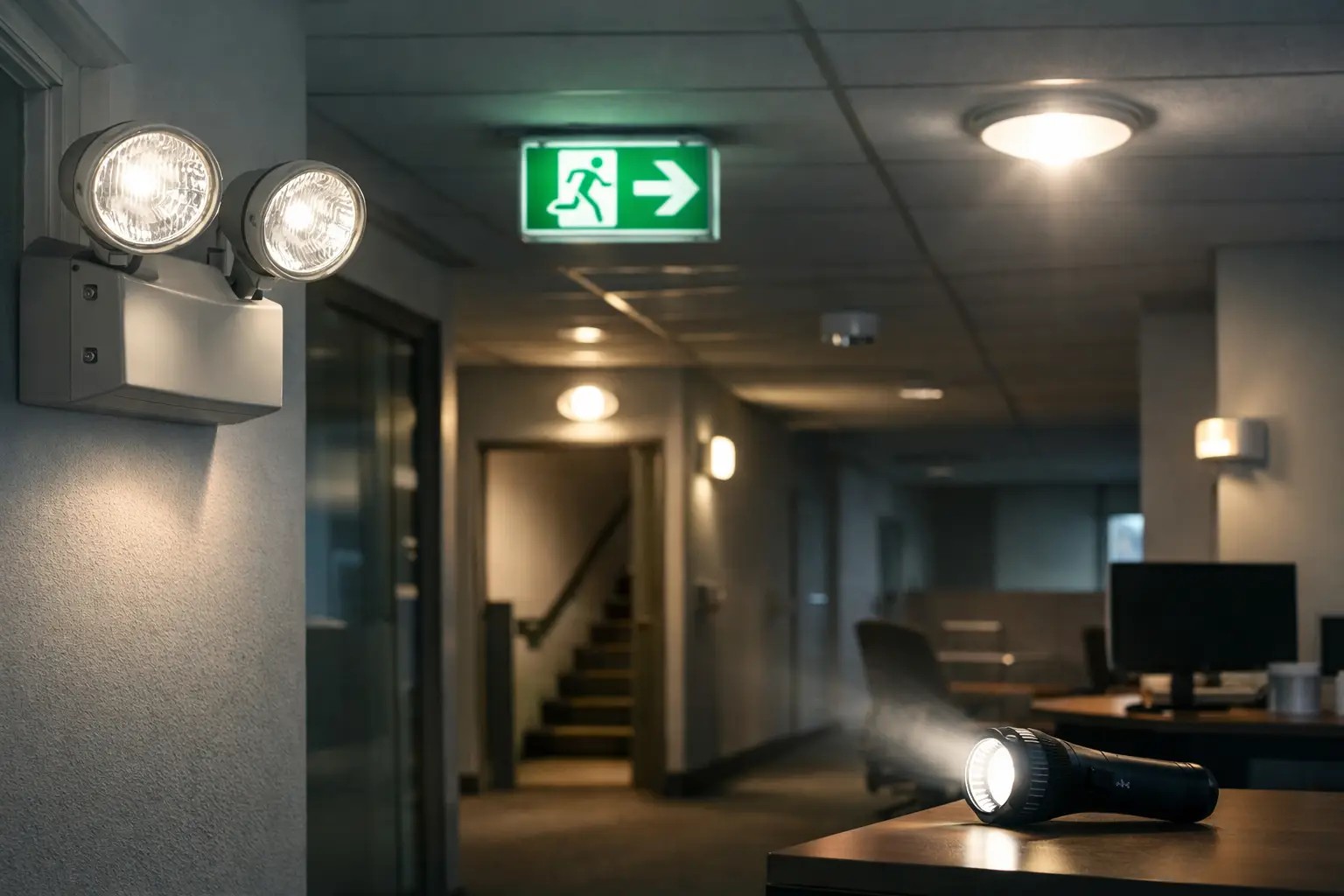
A power cut in an office rarely happens at a convenient moment. Staff may be in a meeting room with no windows, a cleaner could be working alone after hours, or visitors might be unfamiliar with the layout.
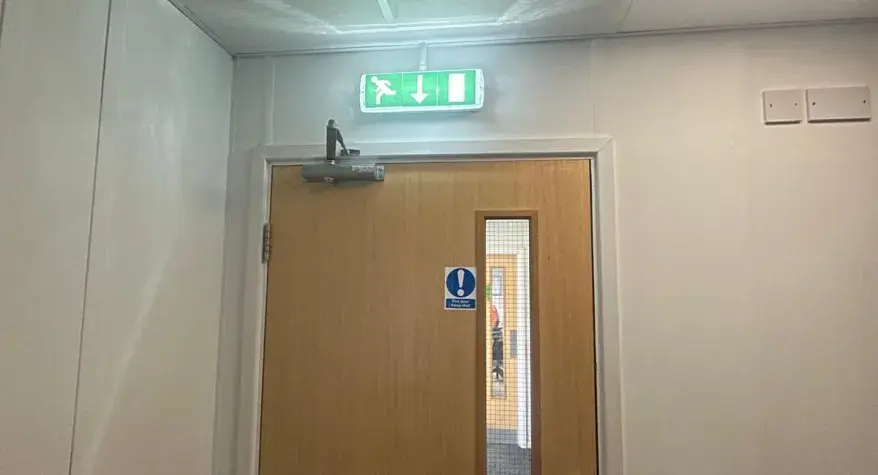
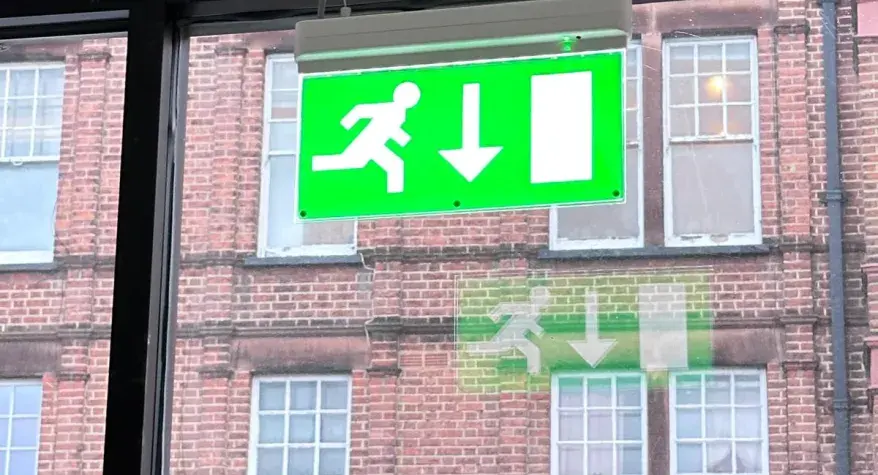
That is why the best office emergency lighting ideas are not just about ticking a compliance box. They are about helping people move safely, stay calm and avoid confusion when normal lighting fails.
For offices in North West London, the right emergency lighting setup depends on the layout, occupancy, working hours and the age of the building. A small serviced office needs something different from a multi-floor workplace with stairwells, toilets, kitchens and shared corridors. Good design starts with the building itself, not with a one-size-fits-all product choice.
What makes emergency lighting work well in an office
The best systems are easy to understand, reliable in an actual emergency and properly suited to the risks in the space. In practical terms, that usually means a combination of escape route lighting, open area lighting and illuminated exit signage, all positioned where people need them rather than where they simply look neat on a plan.
A common mistake is treating emergency lighting as a final add-on after a refurbishment. That can leave dark spots near doorways, uneven coverage in corridors or poorly lit changes in floor level. In an office, even a short route to an exit can become hazardous if there are desks, storage units or glazed partitions in the way.
Best office emergency lighting ideas for safer layouts
1. Light escape routes first
If you are deciding where to invest first, escape routes should take priority. Corridors, staircases, final exits and any route leading people out of the building need dependable illumination in the event of a mains failure. This sounds obvious, but many offices have route changes over time as departments move around, furniture gets added and access points are altered.
Emergency fittings should support the actual route people use, not the route shown on an outdated floor plan. If your office has been reconfigured, it is worth reviewing whether the current lights still serve the safest path out.
2. Add open area lighting where people gather
Open-plan offices, reception areas and breakout spaces often need more than basic route lighting. During an outage, these are the places where people pause, look around and decide where to go next. If the area falls into shadow, people can hesitate or move in the wrong direction.
Well-placed open area emergency lighting helps occupants orient themselves quickly. It is especially useful in larger office floors where the nearest exit may not be immediately obvious from every desk position.
3. Do not overlook stairwells and changes in level
Stairs are one of the highest-risk areas in any lighting failure. A well-lit corridor means little if the stairwell beyond it is poorly covered. Steps, landings and handrail areas should be clearly visible, and this is one area where cutting corners is rarely worth it.
The same applies to split-level offices, raised entrance thresholds and internal ramps. Small level changes become much more dangerous in low visibility, especially when staff are trying to leave quickly.
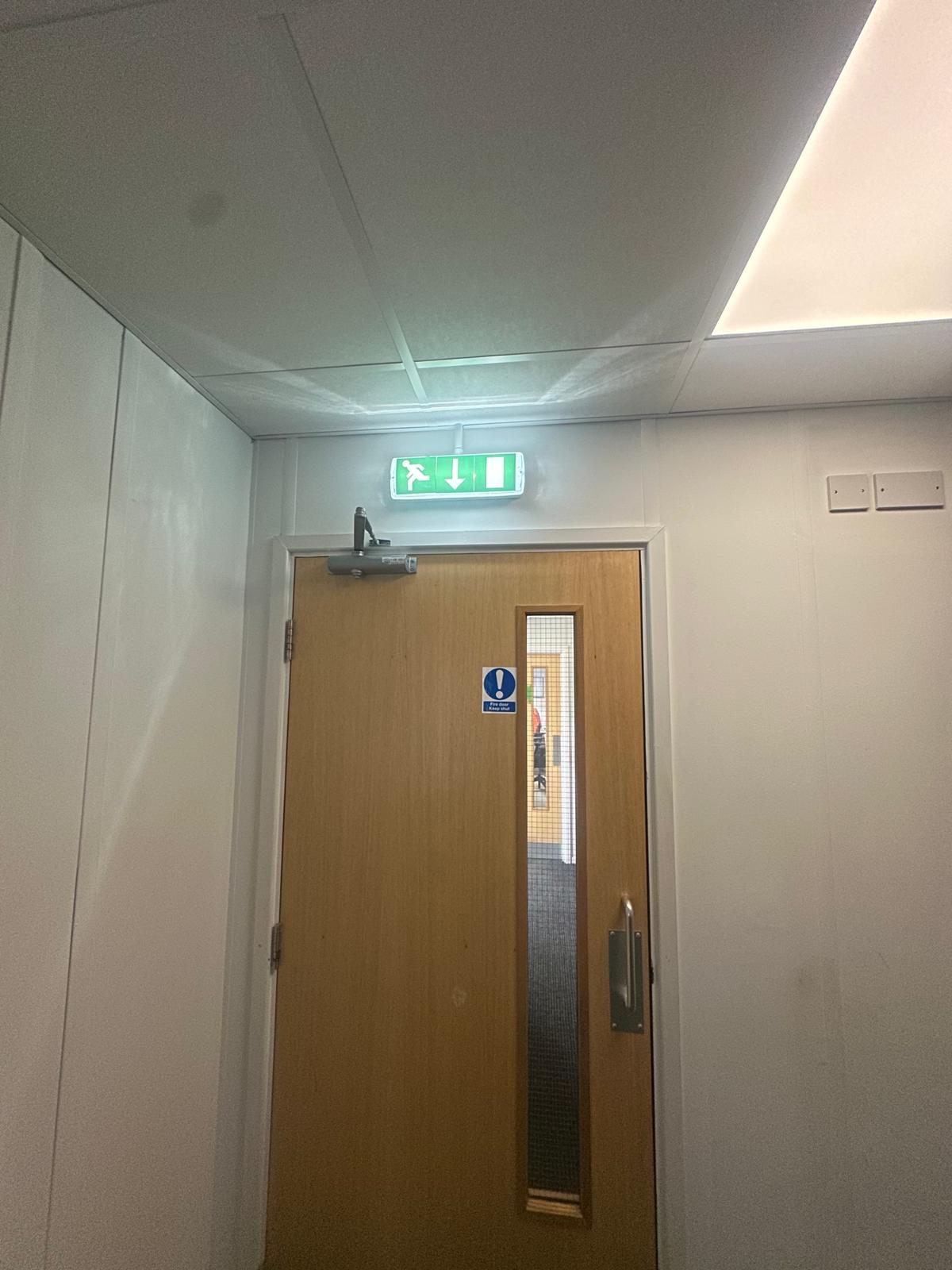
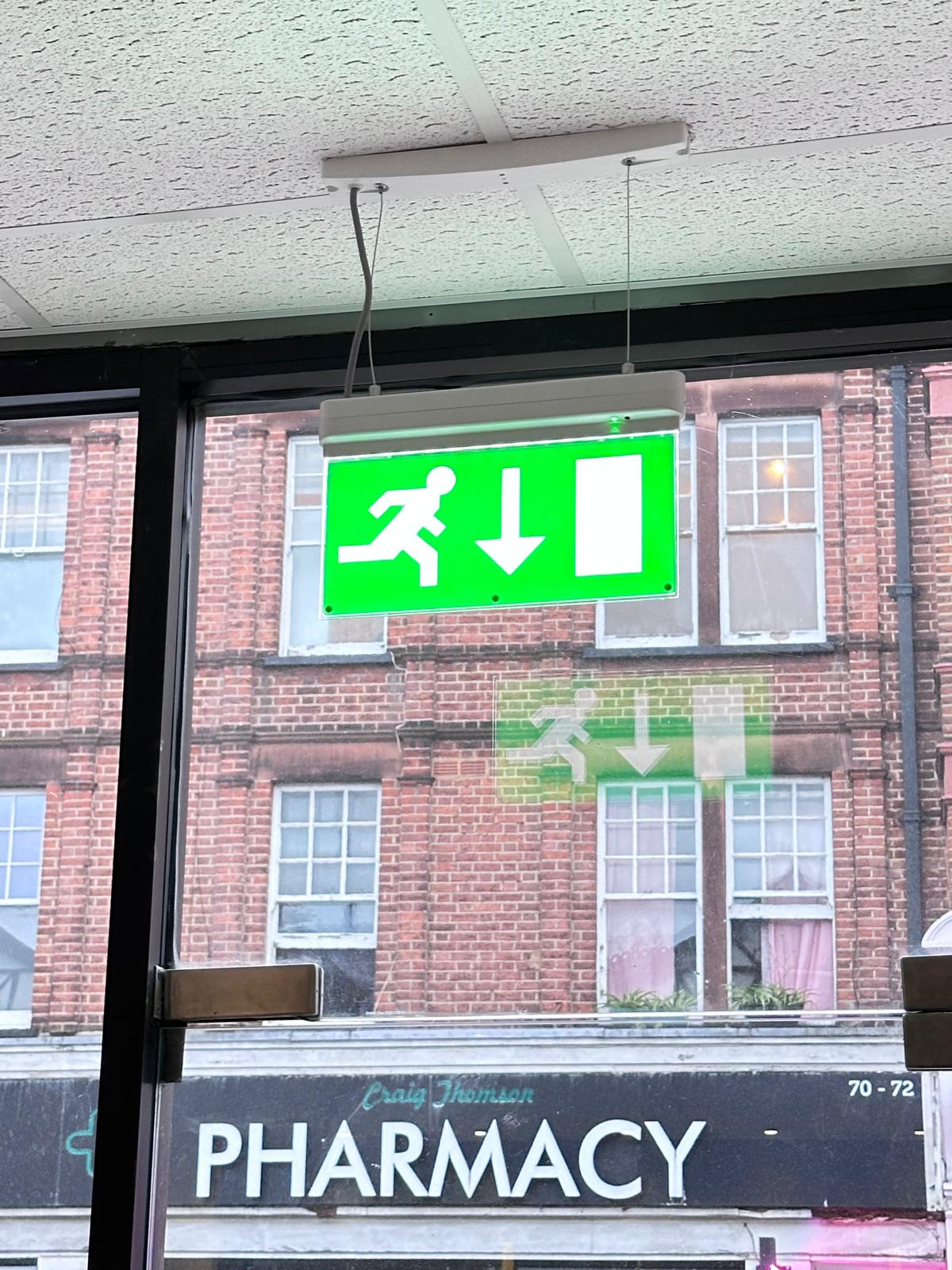
4. Use illuminated exit signs where direction matters
Not every office needs a forest of signs, but where there is any chance of uncertainty, illuminated exit signage makes a real difference. This is particularly helpful in larger buildings, shared commercial premises and offices with multiple doors that are not all suitable for escape.
Signs should be clear, consistent and positioned so they can be seen from the natural line of travel. If one route leads to a dead end or a staff-only area, the lighting layout needs to guide people away from it, not leave them to guess.
Choosing fittings that suit the office
Maintained or non-maintained lighting
One of the main decisions is whether fittings should be maintained or non-maintained. Maintained fittings stay illuminated during normal use and continue working if the power fails. Non-maintained fittings only come on when the mains supply is lost.
In offices, it often depends on the area. Exit signs are commonly maintained so they remain visible at all times. In back-of-house spaces or simple corridors, non-maintained units may be perfectly suitable. The right answer depends on how the space is used and what level of visibility is needed during normal hours.
LED fittings are usually the sensible choice
For most modern offices, LED emergency lighting is the practical option. It is energy efficient, has a long service life and suits both new installations and upgrades. It also tends to give cleaner, more consistent light output than older lamp types.
That said, the fitting still needs to match the space. A sleek recessed unit may suit a finished office ceiling, while a more robust surface-mounted fitting could be better for service corridors or plant areas. Appearance matters in customer-facing spaces, but performance should always come first.
Consider self-test systems in larger offices
Routine testing is part of responsible emergency lighting maintenance. In a small office, manual testing may be manageable. In larger buildings or multi-tenanted sites, self-test emergency fittings can save time and make fault identification easier.
They are not always necessary, and they do cost more upfront, but for landlords, managing agents and businesses responsible for several areas, they can make ongoing compliance more straightforward. It is a good example of where the cheapest install is not always the most practical long-term option.
Areas offices often forget
The best office emergency lighting ideas usually come from spotting the neglected spaces. Toilets, kitchenettes, comms rooms, copy rooms and store cupboards are often overlooked, yet people may be in these areas when the mains fails. If someone opens a windowless toilet door into a dark corridor, disorientation is immediate.
Reception desks are another area worth careful thought. Visitors do not know the building as well as staff do, and they are more likely to rely on visual cues. A properly lit reception and exit route helps them move with confidence rather than waiting for instructions.
If your office has staff working early, late or alone, emergency lighting becomes even more important. Daylight cannot be relied upon, and occupancy patterns often shift outside standard business hours.
Compliance matters, but so does usability
Emergency lighting in offices must meet relevant safety requirements, but compliance on paper is not the whole job. A technically compliant system can still be awkward in practice if fittings are poorly positioned, signs are obstructed or batteries are not maintained.
That is why surveys and testing matter. The layout should be based on a proper assessment of the premises, including escape routes, higher-risk points and occupancy. Installation is only one part of it. Regular inspection, testing and prompt repair are what keep the system dependable when it is actually needed.
For landlords and business owners, this is where working with a qualified electrician helps. It means getting clear advice on what is necessary, what is optional and where an existing system may need upgrading rather than patching. At Lighthouse Engineering Ltd, that practical approach is often what clients value most - honest recommendations, clear written quotations and work carried out to a high standard.
When to upgrade an existing office system
If your current emergency lighting is more than a few years old, there are good reasons to have it reviewed. Office layouts change, occupancy changes and older fittings may no longer perform as expected. A building that once had simple cellular offices may now be open plan, or a storage area may have become a workstation.
Signs to look out for include discoloured fittings, failed test results, inconsistent light levels, outdated signage and batteries that no longer hold charge properly. Sometimes a partial upgrade is enough. In other cases, especially after refurbishment or partitioning changes, a redesign makes more sense than trying to adapt an old scheme.
This is also true when an office changes use. A quiet admin space has different emergency lighting needs from a busier client-facing office with meeting rooms and regular visitors.
Getting the balance right
The best office emergency lighting ideas are the ones that fit the building, support safe escape and remain reliable over time. More fittings do not always mean a better system, and the smartest-looking products are not always the right choice for the job. What matters is clear coverage, dependable operation and a layout that reflects how people actually use the office.
If you are planning a fit-out, reviewing an older installation or trying to make sure your premises are properly covered, it is worth looking beyond the catalogue and focusing on the real risks in the space. A well-designed emergency lighting system is one of those things people barely notice until the moment they truly need it. That is exactly how it should be.
Need some help planning your emergency lighting? Contact us today