If your home or business still uses halogen lighting, you could be spending significantly more on electricity than necessary.
LED lighting VS halogen - Lighthouse Engineering
Across North West London, homeowners, landlords, managing agents and business owners are replacing outdated halogen lighting with modern LED systems to reduce energy costs, improve reliability and create brighter, more comfortable spaces.
At Lighthouse Engineering Ltd, we've upgraded LED lighting in hundreds of domestic and commercial properties throughout Dollis Hill (NW2), Cricklewood, Kilburn, Willesden, Wembley, Hendon, Hampstead, West Hampstead, Neasden, Golders Green and the surrounding North West London area. As NICEIC Approved Electricians, we don't simply replace light bulbs—we assess the complete installation, ensuring your lighting is safe, energy-efficient and designed to perform reliably for many years.
Whether you're renovating your home, upgrading a rental property or improving commercial premises, understanding the differences between LED and halogen lighting will help you make an informed decision.
LED Lighting vs Halogen – What's the Difference?
Halogen lamps produce light by heating a tungsten filament inside a gas-filled bulb. While they provide excellent colour rendering and a warm, familiar appearance, they consume considerably more electricity and generate large amounts of heat.
LED (Light Emitting Diode) lamps create light electronically, making them dramatically more energy efficient.
For example, a typical 50W halogen GU10 spotlight can usually be replaced with a 4W–7W LED GU10, producing similar brightness while using up to 90% less electricity.
As most general-purpose halogen lamps have now been phased out under UK energy efficiency regulations, replacing existing lighting with LEDs has become the logical long-term solution for most properties.
How Much Money Can LED Lighting Save?
Energy savings are often the main reason property owners upgrade.
Imagine a kitchen fitted with ten halogen spotlights.
Halogen Lighting
10 × 50W lamps
Total load: 500 watts
LED Lighting
10 × 5W lamps
Total load: 50 watts
That's a reduction of approximately 450 watts every hour the lights are switched on.
For busy households, offices, restaurants, shops and communal areas where lighting is used daily, these savings quickly become noticeable on electricity bills.
For landlords with multiple rental properties, lower energy consumption and fewer maintenance visits can significantly reduce long-term operating costs.
LED Lights Last Much Longer
Quality LED lamps typically last many times longer than traditional halogen bulbs.
Although lifespan varies depending on installation conditions and product quality, LEDs generally provide:
- Lower maintenance costs
- Fewer lamp replacements
- Reduced disruption
- Better long-term value
This is particularly beneficial in commercial premises, apartment blocks and communal areas where replacing failed lamps often requires specialist access equipment.
LEDs Produce Less Heat
One of the biggest differences between LED and halogen lighting is heat.
Halogen lamps convert much of their electrical energy into heat rather than light.
Anyone who has tried changing a halogen spotlight shortly after switching it off knows how extremely hot they become.
Modern LEDs operate considerably cooler while still producing excellent illumination.
However, LEDs still generate heat within their electronic components, so they must be installed in suitable fittings with adequate ventilation. Installing incompatible lamps into enclosed fittings or covering them with insulation can significantly shorten their lifespan.
Fire-Rated Downlights Are Just as Important as the Lamp
A successful lighting upgrade involves far more than changing bulbs.
Modern fire-rated downlights help maintain the fire resistance of ceilings after installation, while IP-rated fittings are essential in bathrooms, shower rooms and other damp environments.
A professional lighting upgrade considers:
- Existing wiring
- Fire protection
- Ceiling construction
- Thermal insulation
- Bathroom zones
- Circuit loading
- Transformer compatibility
- LED drivers
- Future maintenance
Choosing quality fittings at the outset usually prevents expensive problems later.
Modern LED Lighting Offers Outstanding Light Quality
Early LED lamps gained a reputation for producing cold, harsh light.
Modern products are completely different.
Today's LEDs are available in a wide range of colour temperatures, beam angles and brightness levels.
Warm White (2700K–3000K)
Ideal for:
- Living rooms
- Bedrooms
- Restaurants
- Hotels
Neutral White (4000K)
Perfect for:
- Kitchens
- Utility rooms
- Offices
- Retail premises
Cool White (5000K+)
Best suited to:
- Workshops
- Garages
- Commercial workspaces
- Security lighting
Brightness should always be measured in lumens, while beam angle should be selected carefully to achieve even lighting throughout the room.
Can Halogen Bulbs Be Replaced with LEDs?
In many cases, yes—but not always.
GU10 Halogen Lamps
These can often be replaced directly with LED GU10 lamps.
However, compatibility with existing dimmer switches should always be checked.
MR16 Low Voltage Lamps
Older MR16 systems frequently use transformers hidden above ceilings.
Many of these transformers require a minimum electrical load, which LED lamps do not provide.
This can cause:
- Flickering
- Buzzing
- Poor dimming
- Lamps failing to switch on
- Premature failure
Replacing the transformer, LED driver or fitting is often the best long-term solution.
LED Dimming Problems
Many traditional dimmer switches were designed specifically for halogen lighting.
Modern LEDs usually require compatible trailing-edge LED dimmers.
Using the wrong dimmer commonly results in flickering, buzzing or limited dimming performance.
Testing compatibility before replacing every lamp can prevent unnecessary expense.
When Halogen Lighting May Still Be Appropriate
There are still a few situations where halogen lighting remains suitable.
These include:
- Certain ovens
- Specialist display lighting
- Some older equipment
- Temporary installations awaiting refurbishment
In these cases, manufacturers' recommendations should always be followed.
For almost every domestic or commercial property, however, LED technology now offers the best combination of efficiency, reliability and long-term performance.
A Recent LED Lighting Upgrade in North West London
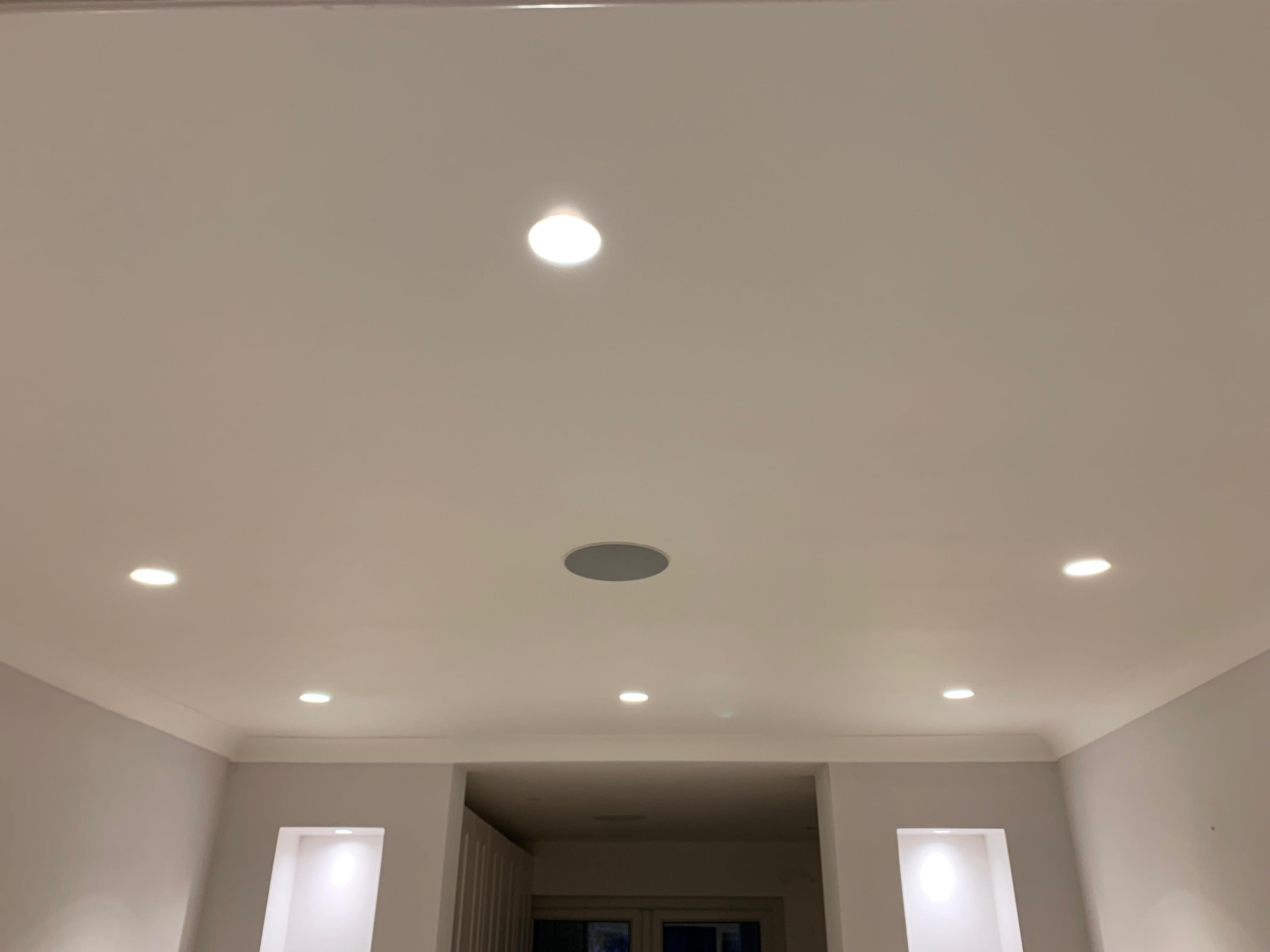
We recently upgraded the lighting in a family kitchen in Cricklewood, replacing twenty ageing halogen downlights with modern fire-rated LED fittings and LED-compatible dimmer controls.
The homeowners immediately noticed brighter, more even lighting while significantly reducing electricity consumption. By replacing outdated transformers and fitting modern LED-compatible controls, the installation now operates reliably with no flickering, buzzing or premature lamp failures.
Projects like this demonstrate why a complete lighting assessment often delivers better long-term results than simply replacing individual bulbs.
Why Choose Lighthouse Engineering Ltd?
Property owners throughout North West London choose Lighthouse Engineering Ltd because we offer:
- Over 30 years of electrical experience
- NICEIC Approved Contractor
- Fully insured electricians
- Clear written quotations
- High-quality branded materials
- Domestic and commercial expertise
- Specialist electrical fault finding
- Energy-efficient lighting solutions
- Honest advice with no unnecessary upselling
- A reputation as one of the trusted electricians in North West London
Our goal is simple: install lighting that is safe, reliable, energy efficient and built to last.
Frequently Asked Questions
Are LED lights cheaper to run than halogen?
Yes. LED lighting typically uses up to 90% less electricity than equivalent halogen lighting while producing similar levels of brightness.
Can I replace halogen bulbs with LED bulbs?
Many GU10 lamps can be replaced directly. Older MR16 installations may require compatible transformers or LED drivers.
Why do LED lights flicker?
Common causes include incompatible dimmer switches, failing transformers or poor-quality LED lamps.
Do I need a new transformer?
If your existing transformer isn't compatible with LED lighting, replacing it is often the most reliable solution.
Which LED colour is best for kitchens?
Neutral White (around 4000K) is popular because it provides bright, natural-looking task lighting without appearing overly cold.
Are LED downlights fire rated?
The lamp itself isn't fire rated—the fitting is. Modern fire-rated downlights help maintain the fire integrity of ceilings.
How much does it cost to replace halogen lighting with LEDs?
Costs vary depending on the number of fittings, compatibility of the existing installation and whether transformers, dimmers or fittings also need replacing. A qualified electrician can provide an accurate quotation following an inspection.
Professional LED Lighting Installation in North West London
If you're considering replacing halogen lighting with modern LEDs, Lighthouse Engineering Ltd provides expert advice and professional installations throughout Dollis Hill, Cricklewood, Kilburn, Willesden, Wembley, Hendon, Hampstead, West Hampstead, Neasden, Golders Green and across North West London.
We install:
- LED lighting systems
- Fire-rated downlights
- Kitchen lighting
- Bathroom lighting
- Garden lighting
- Commercial lighting
- Office lighting
- Security lighting
- Consumer unit upgrades
- Electrical fault finding
- EICR inspections
- Smoke alarm installations
Every installation is designed around your property, ensuring compatibility with your existing electrical system while delivering safe, reliable and energy-efficient lighting.
Whether you need a single room upgraded or a complete lighting redesign, Lighthouse Engineering Ltd is committed to providing high-quality workmanship, honest advice and excellent customer service.
Get in touch today on 020 8452 0694 or via our contact form.