A socket that feels unusually warm, lights that flicker without explanation or a circuit breaker that keeps tripping are all warning signs worth taking seriously.
Although these problems can seem minor, they may indicate an electrical fault that needs professional attention.
For homeowners, landlords and businesses across Dollis Hill, Cricklewood, Willesden Green, Wembley and North West London, recognising the early signs of unsafe wiring can help prevent further damage and reduce the risk of electric shock or electrical fire.
At Lighthouse Engineering Ltd, we have over 30 years of electrical experience, specialising in electrical fault finding, diagnostics, testing and repairs. As a NICEIC Approved Contractor and Which? Trusted Trader, we help customers understand what is wrong with their electrical installation and what needs to be done to put it right.
Electrical circuits that keep tripping
Does your fuse board keep tripping when you use the kettle, washing machine, oven or another electrical appliance?
Circuit breakers and RCDs are designed to disconnect the electricity supply when they detect certain faults or unsafe conditions. An occasional trip may have a straightforward explanation, but repeated tripping should never be ignored.
Possible causes include:
- Damaged electrical cables or wiring.
- A faulty appliance.
- Loose or deteriorating connections.
- Water ingress affecting an electrical circuit.
- An overloaded circuit or an underlying installation fault.
Simply resetting the breaker without investigating the cause can leave the original problem unresolved.
If a circuit continues to trip, stop using the affected circuit and arrange for a qualified electrician to investigate. If there is burning, smoke or evidence of overheating, keep clear and seek urgent assistance.
If you need help with recurring electrical faults in NW2, our consumer unit and fuse board services may be relevant, although a proper diagnosis is needed before deciding whether the consumer unit itself needs replacing.
Warm sockets, switches or plugs
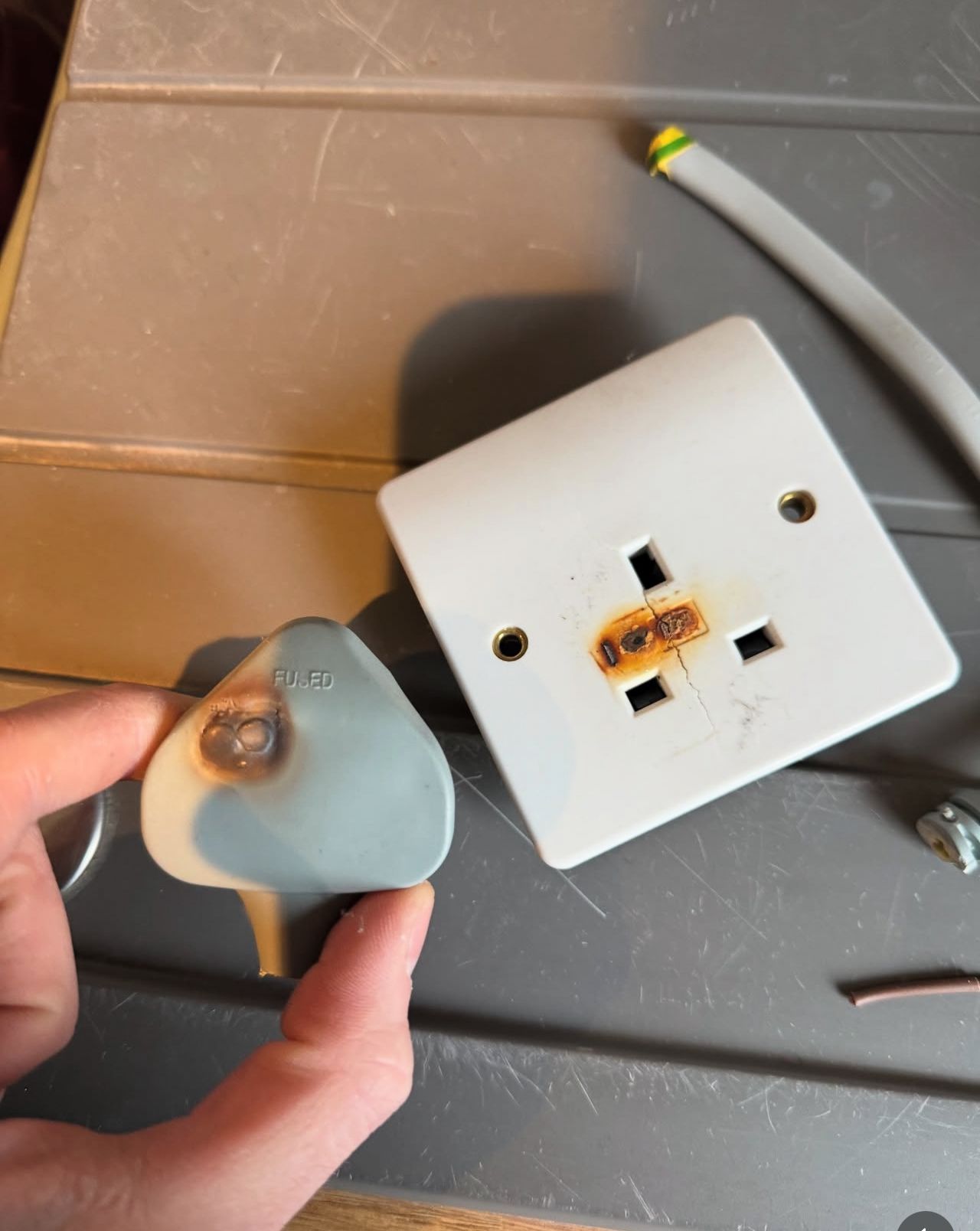
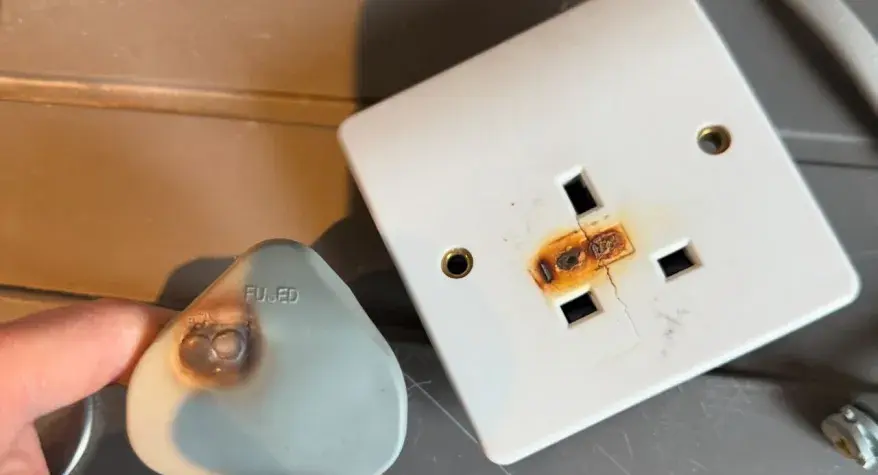
A socket or switch that becomes noticeably warm during normal use deserves attention. Heat can be caused by a loose connection, damaged accessory, excessive loading or another electrical fault.
Watch out for:
- Warm or hot socket faceplates.
- Brown marks or discolouration around a socket.
- Melted plastic or damaged plug pins.
- A burning smell near a socket or switch.
- Crackling or buzzing sounds.
Some chargers and power supplies become mildly warm during normal operation. However, a hot socket, signs of scorching or a burning smell should not be dismissed as normal.
Stop using the affected accessory. If it is safe to do so, switch off the relevant circuit without touching damaged equipment. Do not remove the socket cover or attempt to tighten internal connections yourself.
A qualified electrician can test the circuit, check the connections and determine whether the problem is confined to one accessory or indicates a wider issue with the wiring.
Flickering lights or unexplained power problems
Flickering lights can have several causes. A loose bulb or incompatible LED dimmer may explain a problem affecting one light, but flickering across several rooms can indicate something more serious.
Other warning signs include lights that dim unexpectedly, intermittent loss of power or electrical problems that occur when a large appliance starts.
Possible causes include loose connections, faulty equipment, circuit problems or a fault affecting the electrical supply.
It is important not to assume the wiring is safe simply because the lights continue working.
At Lighthouse Engineering Ltd, electrical fault finding involves investigating the symptoms, carrying out appropriate tests and tracing the cause rather than simply replacing parts and hoping the problem disappears.
If you are experiencing unexplained electrical faults in Dollis Hill, Cricklewood or the surrounding NW London area, contact us to arrange an investigation.
Old, damaged or poorly altered wiring
Electrical installations can change considerably over the years. Additional sockets, lighting, extensions and new appliances may have been added as a household's needs have changed.
Older wiring is not automatically unsafe, but its condition, installation method, earthing, protective devices and suitability for modern demands all need to be considered.
Warning signs include:
- Cracked or damaged cable insulation.
- Exposed conductors or loose electrical accessories.
- Cables trapped beneath carpets or doors.
- Poorly fitted additions or temporary wiring arrangements.
- An old consumer unit with limited or outdated protection.
- Electrical alterations that have never been properly checked.
A property may still have working lights and sockets while hidden defects remain inside walls, floor voids or accessory boxes.
If you have bought an older property, are planning renovations or are concerned about the condition of your wiring, an electrical inspection can help establish what is safe and identify any remedial work that may be necessary.
Our electricians can explain the findings clearly and recommend appropriate repairs or upgrades without automatically assuming that a complete rewire is required.
Burning smells, buzzing noises or electric shocks
These are among the most concerning signs of an electrical fault.
A burning smell near a socket, switch, light fitting or consumer unit can indicate overheating. Buzzing, crackling or sizzling sounds may also point to a loose or failing electrical connection.
An electric shock or persistent tingling from an appliance, switch or metal fitting is another serious warning. It may indicate an appliance fault or a problem with earthing or bonding.
What should you do?
Stop using the affected equipment.
Keep clear of damaged or overheating accessories.
Switch off the supply only if it is safe to do so.
Do not touch exposed wiring or attempt a repair.
Arrange urgent professional assistance.
If there is smoke, fire or immediate danger, move away and call 999. Do not approach or touch equipment that may still be live.
These symptoms should never be left until a convenient time for a routine repair.
Why professional electrical fault finding matters
Electrical faults are not always obvious. Replacing a socket or resetting a breaker may temporarily appear to solve the problem, but it does not necessarily address the underlying cause.
Professional electrical fault finding can help identify issues such as damaged cables, loose connections, insulation faults, overloaded circuits and problems with protective devices.
The correct approach is to investigate the symptoms, carry out appropriate testing and establish what remedial work is required.
For homeowners, this can help avoid unnecessary disruption. For landlords and letting agents, prompt investigation can help maintain electrical safety and keep appropriate inspection and repair records.
An Electrical Installation Condition Report (EICR) can provide an assessment of the condition of a property's fixed electrical installation. An EICR is particularly relevant when checking older installations or meeting applicable rental-property inspection requirements. However, if you have an active electrical fault, do not rely on a routine inspection booked for a later date instead of arranging prompt fault finding.
When should you arrange an electrical inspection?
Consider arranging professional advice if you notice repeated tripping, unexplained flickering, signs of overheating, damaged wiring or concerns about an older installation.
An inspection may also be appropriate before major renovations, after purchasing an older property or when adding equipment such as an EV charger or electric heating.
Not every problem requires a new consumer unit or a full rewire. Depending on the findings, the solution may be a replacement accessory, a targeted cable repair, improved circuit protection or more extensive remedial work.
The important thing is to establish the cause before deciding on the solution.
Your local electrician for fault finding in NW London
Lighthouse Engineering Ltd provides electrical fault finding, diagnostics, testing, repairs and upgrades for homes, landlords and businesses across Dollis Hill, Cricklewood, Willesden Green, Wembley and nearby North West London areas.
With over 30 years of electrical experience, we understand how frustrating it can be when your electrics keep tripping or a fault cannot be easily explained. We take a practical approach: investigate the problem, explain what we find and provide clear advice on the work needed.
Our credentials include:
- NICEIC Approved Contractor.
- Which? Trusted Trader.
- AICO Gold Installer.
Whether you need help with a tripping RCD, a faulty socket, flickering lights or concerns about older wiring, we can help you establish the next steps. Get in touch today!