In many cases, yes. But whether a landlord should install the alarms themselves depends on the type of alarm, the property, the existing system and the level of fire protection required.
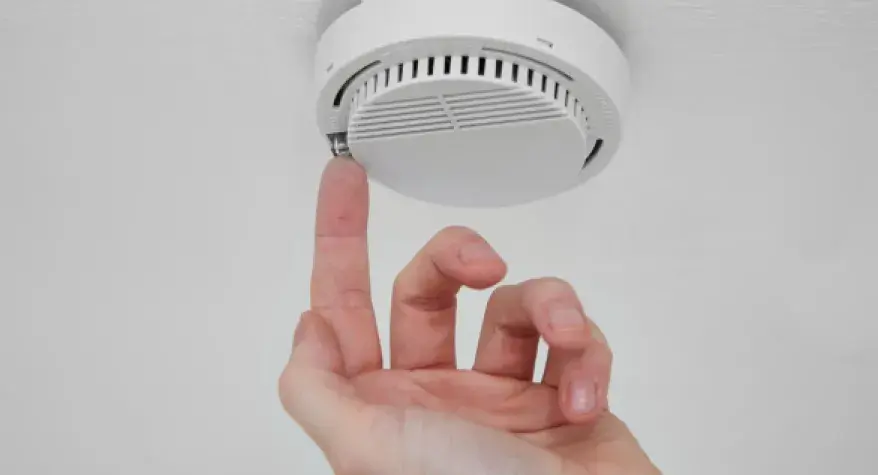
For landlords in North West London, getting smoke alarm installation right is about more than simply fixing an alarm to the ceiling. The property may be a standard rental house, a converted flat, an HMO or a property with an existing interconnected fire alarm system. Each situation can have different requirements.
At Lighthouse Engineering Ltd, we are Aico Gold Standard Installers, NICEIC Approved Contractors and Which? Trusted Traders, with over 30 years' electrical experience. We install and maintain smoke, heat and carbon monoxide alarm systems for landlords and property managers across Dollis Hill, Cricklewood, Wembley, Willesden, Kilburn, Hampstead, Hendon and North West London.
Can a landlord legally install a smoke alarm themselves?
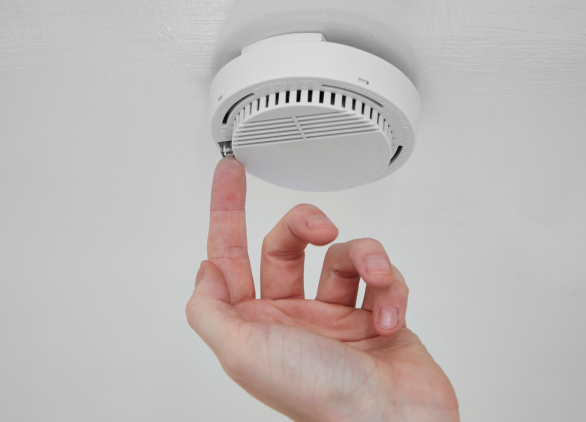
For a straightforward battery-powered smoke alarm, a landlord can generally install the alarm themselves.
The Smoke and Carbon Monoxide Alarm (England) Regulations require landlords to provide appropriate smoke alarms in rented properties. At least one smoke alarm is required on every storey of a property where there is a room used wholly or partly as living accommodation.
Where a fixed combustion appliance is installed in a room used wholly or partly as living accommodation, a carbon monoxide alarm is also generally required, except where the appliance is a gas cooker.
The regulations do not simply say that every alarm must be installed by an electrician.
However, there is an important difference between fitting a simple battery alarm and designing or installing a complete fire alarm system.
When can a landlord fit their own smoke alarm?
A landlord may be able to fit a straightforward battery-operated smoke alarm where:
- The alarm is suitable for the property.
- It is installed in the correct position.
- The alarm meets the appropriate standard.
- The required number of alarms is provided.
- The alarm can be tested and maintained.
- There is no existing system that requires professional alteration.
- The property does not have additional HMO, licensing or fire-risk-assessment requirements.
For a simple house with a small number of suitable battery alarms, installation can be relatively straightforward.
The problem is that rental properties are not always that simple.
What about mains-powered smoke alarms?
This is where things become more complicated.
A mains-powered smoke alarm involves electrical installation work and may also form part of an interconnected alarm system.
If new wiring is required, an existing circuit needs altering, or several alarms need to be interconnected, the work should be carried out by someone competent to undertake the electrical installation.
There can also be important decisions about:
- Alarm location
- Alarm type
- Interconnection
- Backup batteries
- Heat detection
- Carbon monoxide detection
- Existing wiring
- Testing and maintenance
- The overall fire alarm strategy
Simply replacing one alarm with another is not always the right approach.
Should landlord smoke alarms be interlinked?
Interlinked alarms can provide an important additional level of warning because when one alarm detects a fire, the other interconnected alarms can sound.
This can be particularly useful in larger homes, properties with several floors and properties where occupants may be some distance from the source of a fire.
However, whether interlinked alarms are required depends on the property and the applicable fire-safety requirements.
For landlords, particularly those dealing with HMOs, converted properties or licensed accommodation, it is important not to assume that the basic requirements for an ordinary rented house are sufficient.
At Lighthouse Engineering, we install Aico interconnected smoke, heat and carbon monoxide alarm systems, including systems suitable for landlords and property managers.
What type of smoke alarm should landlords use?
There isn't one alarm that is suitable for every room or every property.
Depending on the circumstances, a property may require a combination of:
- Optical smoke alarms
- Heat alarms
- Carbon monoxide alarms
- Interconnected alarms
- Mains-powered alarms
- Battery-powered alarms
For example, kitchens are not normally the place for a standard smoke alarm because cooking fumes can cause nuisance alarms. A suitable heat alarm may be more appropriate, depending on the design of the system.
This is one reason why simply buying a pack of smoke alarms and fitting one on every ceiling isn't necessarily the best approach.
Why Aico smoke alarms are popular with landlords
Aico is a well-established manufacturer of domestic fire and carbon monoxide detection equipment, and its systems are widely used in residential properties.
As an Aico Gold Standard Installer, Lighthouse Engineering has completed Aico's relevant installer training, including training covering areas such as system design, fire-risk considerations, alarm types, siting, installation, interconnection, testing and maintenance.
This is particularly useful when dealing with landlords who want a properly considered alarm system rather than simply replacing individual alarms.
We can look at the property as a whole and advise on the appropriate combination of smoke, heat and CO detection.
What about HMOs?
HMOs can be considerably more complicated.
The fire precautions required in an HMO can depend on factors including:
- The size and layout of the property
- Number of occupants
- Number of storeys
- Escape routes
- Existing fire precautions
- Local authority licensing requirements
- Fire-risk assessment
- The type of conversion
An HMO may require a more comprehensive interconnected fire alarm system and additional detection than a standard single-family rental property.
If you are a landlord converting a property into an HMO, or taking over an existing HMO, it is worth getting the fire alarm arrangements assessed before simply replacing the existing alarms.
What about converted flats in North West London?
This is another area where landlords need to be careful.
North West London contains a large number of older properties that have been converted into flats or subdivided into separate accommodation.
A property may have:
- Older wiring
- Mixed electrical installations
- Existing interlinked alarms
- Shared communal areas
- Multiple flats
- Converted loft spaces
- Older fire alarm systems
- Different fire-safety requirements
In these situations, the correct solution isn't always obvious from looking at the existing alarm.
A professional inspection can establish what is already installed and whether the system is appropriate for the property.
Does a landlord have to use an electrician?
Not necessarily for every smoke alarm.
The legal requirements do not mean that a landlord must employ an electrician simply to install a basic battery-powered alarm.
However, using a competent professional can be sensible where:
- Mains-powered alarms are being installed.
- Alarms need to be interconnected.
- New wiring is required.
- Existing wiring needs modifying.
- The property is an HMO.
- The property has been converted into flats.
- There are multiple floors or complicated layouts.
- The existing alarm system is old or unclear.
- You are unsure what type of alarm should be installed.
- The property has additional fire-safety requirements.
The aim should be to provide the right level of protection for the property rather than simply doing the minimum possible.
What happens when a tenant reports a faulty smoke alarm?
Landlords should take reports of faulty prescribed alarms seriously.
Under the regulations, where a tenant reports that an alarm is not working and the landlord is satisfied that it is not functioning properly, the landlord must repair or replace it as soon as reasonably practicable.
This is why landlords should have a simple process for dealing with alarm faults.
Keep records of:
- Alarm installation
- Alarm type
- Location
- Testing
- Faults reported by tenants
- Repairs or replacements
- Dates of inspections
Good records can also make managing a portfolio of rental properties much easier.
Do landlords have to test smoke alarms?
Landlords must check that the required alarms are working on the first day of a new tenancy.
The regulations also place responsibilities on landlords to ensure prescribed alarms remain in proper working order when faults are reported.
Regular inspection and maintenance is sensible, particularly for landlords with multiple properties.
For larger portfolios, a scheduled inspection programme can help prevent alarms becoming overlooked.
What if the property already has an old alarm system?
Don't automatically assume that an existing alarm system is adequate simply because it is already there.
We regularly come across older properties where alarms have been:
- Disconnected
- Removed
- Replaced with incompatible units
- Damaged
- Left with depleted backup batteries
- Installed in unsuitable positions
- Altered during building work
If you inherit a property with an existing system, it can be worthwhile having it checked before deciding whether individual alarms simply need replacing or whether the system needs upgrading.
A practical smoke alarm checklist for landlords
Before handing a property to a tenant, check:
✓ There is at least one required smoke alarm on each relevant storey.
✓ Carbon monoxide alarms are installed where required.
✓ Alarm locations are appropriate.
✓ The alarm type is suitable for the room.
✓ Any required interconnection is working correctly.
✓ Mains-powered alarms have been correctly installed.
✓ Backup batteries are present and functioning where applicable.
✓ All required alarms have been tested.
✓ Faults have been repaired.
✓ Installation and testing records are retained.
✓ Any additional HMO, licensing or fire-risk-assessment requirements have been considered.
Why choose Lighthouse Engineering for landlord smoke alarm installation?
At Lighthouse Engineering Ltd, we work with landlords, letting agents and property managers throughout North West London.
We are:
- Aico Gold Standard Installers
- NICEIC Approved Contractors
- Which? Trusted Traders
- Experienced electricians with over 30 years in the trade
- Experienced in smoke, heat and carbon monoxide alarm systems
- Experienced with rental properties, HMOs and converted properties
- Based in Dollis Hill, NW2
Our approach is straightforward: we look at the property, understand what is required and recommend a practical alarm system that is suitable for the building and its occupants.
We don't believe in fitting equipment simply for the sake of it.
To discuss Smoke Alarm Installation for Landlords in North London, get in touch via our contact form or give us a call today!