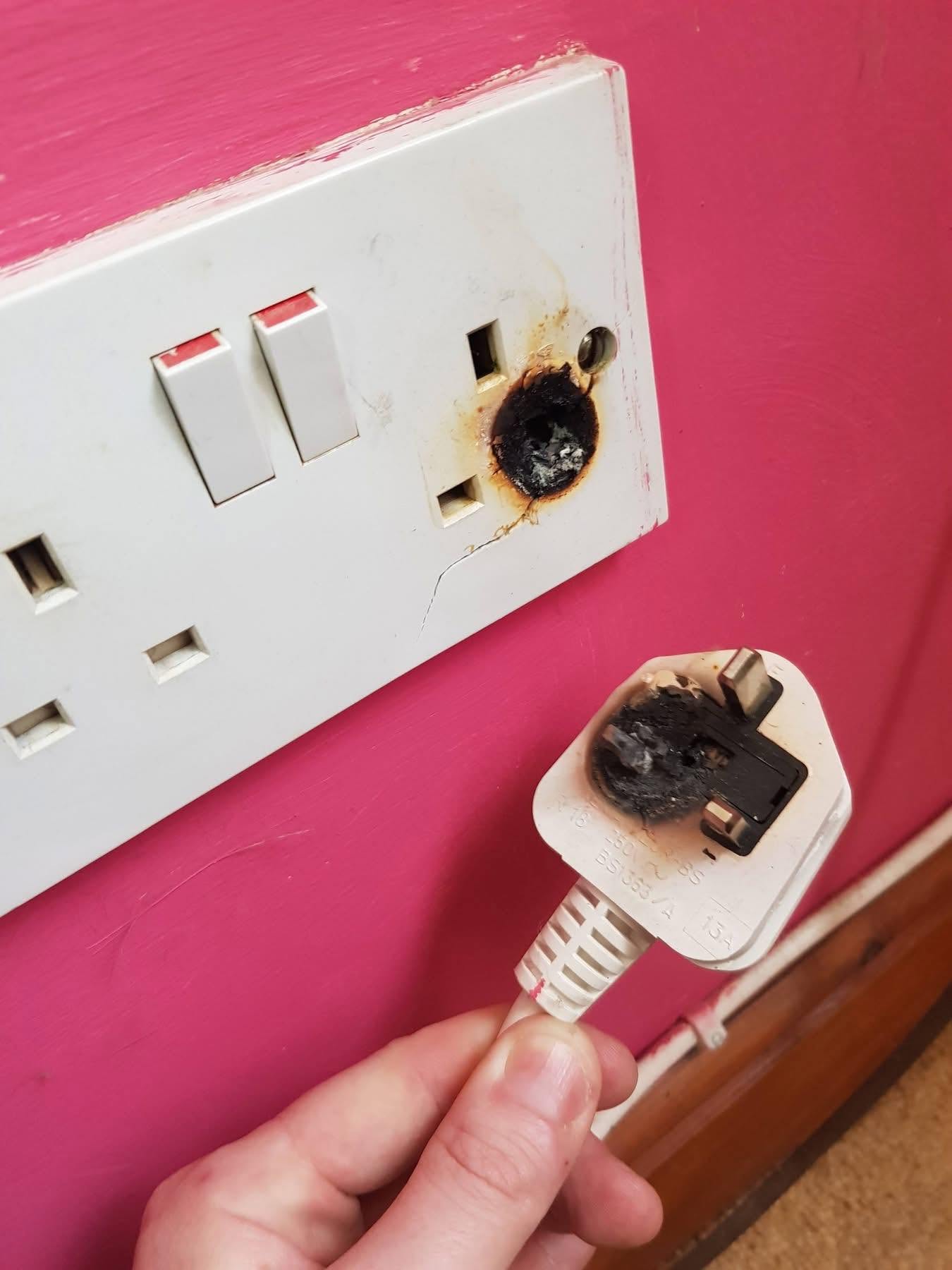
A socket outlet is easy to ignore until it becomes inconvenient, damaged or starts showing signs of a potential electrical fault.
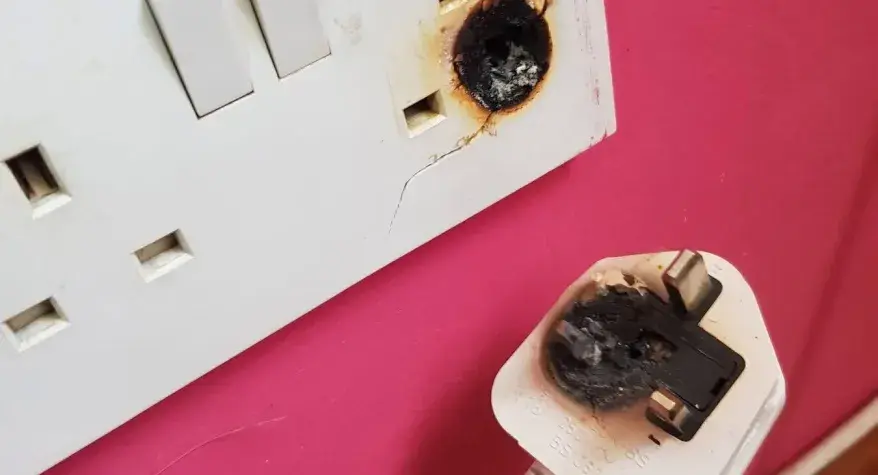
Perhaps a plug keeps falling out, a socket feels warm, there are brown or burnt marks around the faceplate, or you are relying on extension leads because there simply are not enough sockets in the room.
These problems are common in homes, rented properties and businesses across North West London, including Dollis Hill, Cricklewood, Kilburn, Willesden, Wembley and Hendon. While a damaged socket can sometimes be a straightforward replacement, it can also be a sign of a more serious problem with the electrical circuit.
At Lighthouse Engineering Ltd, we provide professional socket installation, socket replacement and electrical fault finding throughout North West London, helping homeowners, landlords, letting agents and businesses keep their electrical installations safe and practical.
With more than 30 years' experience, we don't just replace the visible accessory. Where necessary, we investigate what caused the problem in the first place.
When Should a Socket Outlet Be Replaced?
A socket should be checked by a qualified electrician if you notice any of the following:
- The socket is cracked, loose or damaged
- A plug will not stay securely in the socket
- The socket feels unusually hot
- There are brown, black or burnt marks
- You notice a burning or melted-plastic smell
- The socket is buzzing, crackling or sparking
- The switch feels loose or unusual
- The circuit repeatedly trips when the socket is used
- The socket or surrounding wall shows signs of overheating
An extension lead has become a permanent fixture because there are not enough sockets
A socket that is slightly warm because of a particular charger or appliance is not necessarily an emergency, but a hot faceplate, burning smell, buzzing, crackling or visible scorching should not be ignored.
If you believe there is an immediate electrical danger, switch off the circuit if it is safe to do so and arrange for a qualified electrician to investigate.
Socket Problems Can Be More Than a Faulty Faceplate
It can be tempting to assume that replacing a damaged socket will solve the problem.
Sometimes it will.
However, a socket can be damaged because of an underlying issue such as:
- A loose electrical connection
- Overheating caused by a poor terminal connection
- Damaged cable
- An overloaded circuit
- A faulty appliance
- Moisture ingress
- Incorrect previous electrical work
- Deteriorated wiring
- A problem elsewhere on the circuit
This is particularly important when dealing with burnt sockets, repeated RCD trips or sockets that become hot during normal use.
At Lighthouse Engineering, our background in electrical fault finding and diagnostics means we look beyond the faceplate where necessary. The aim is to identify the cause rather than simply replace the symptom.
Need More Sockets in Your Home?
Modern homes use considerably more electrical equipment than they did when many properties in North West London were originally wired.
Televisions, computers, monitors, printers, games consoles, chargers, Wi-Fi equipment, lamps and home-working equipment can quickly turn one double socket into a collection of extension leads and multiway adaptors.
If extension leads have become a permanent part of the room, it may be time to consider installing additional fixed sockets.
An additional socket may be able to be connected to an existing circuit, provided the circuit is suitable and has sufficient capacity. In other situations, a new circuit or alterations to the electrical installation may be more appropriate.
This is why an electrician should assess the installation before simply adding another outlet.
Additional Socket Installation in NW London
We install additional sockets for homeowners and businesses across areas including:
- Dollis Hill
- Cricklewood
- Willesden
- Willesden Green
- Kilburn
- Wembley
- Hendon
- Hampstead
- North West London
Sockets can be positioned to suit how you actually use the room.
For example, a home office may benefit from additional sockets around a desk for computers, monitors, printers, routers and chargers.
A television wall may need sockets positioned behind the TV and associated equipment.
Bedrooms may benefit from sockets on both sides of the bed rather than relying on extension leads.
During a refurbishment or redecoration, it can be particularly worthwhile considering socket positions before walls and finishes are completed.
Socket Installation for Kitchens
Kitchens often have some of the highest electrical demands in a home.
Kettles, microwaves, coffee machines, air fryers, washing machines, dishwashers and other appliances can all place significant demands on an electrical installation.
Installing additional sockets can make a kitchen much more practical, but simply adding more outlets is not always the complete answer.
The electrical circuit, protective devices, cable sizes, existing installation and intended appliances all need to be considered.
Sockets should also be positioned appropriately in relation to sinks, heat sources and work surfaces.
If you are having a kitchen refurbished in Dollis Hill, Cricklewood, Wembley or elsewhere in NW London, it is worth planning the electrical installation before the kitchen is fitted.
Home Office Socket Installation
Working from home has changed how many properties use electricity.
A typical home office might require power for:
- Desktop computers
- Laptops
- Monitors
- Printers
- Routers
- Desk lamps
- Speakers
- Phone chargers
- Other office equipment
Rather than running several extension leads across the floor, additional sockets can be installed in sensible locations around the workspace.
Good socket planning can make a home office safer, tidier and much easier to use.
Living Room and Bedroom Socket Installation
Socket positioning becomes particularly important when furniture is moved or rooms are refurbished.
A socket hidden behind a large piece of furniture can be surprisingly inconvenient. Similarly, having only one socket beside a bed often leads to extension leads and multiway adaptors.
When carrying out electrical work, think about how the room is likely to be used for the next five or ten years.
Where will the television go?
Where will furniture be positioned?
Will the room become a home office?
Where will phones and other devices be charged?
Planning these things before electrical work is completed can save time and disruption later.
Choosing the Right Socket
A standard switched double socket is suitable for many situations, but there are numerous accessory options available.
Depending on the location, you may want to consider:
- USB sockets
USB charging sockets can be useful beside beds, desks and workstations where phones, tablets and other devices are regularly charged.
However, they should be properly selected and installed as part of the overall electrical installation.
- Decorative sockets
Decorative metal and modern low-profile accessories can complement renovated homes and newly decorated rooms.
The appearance is important, but the socket must also be suitable for the installation and correctly fitted.
- Outdoor sockets
Outdoor sockets require suitable weather-resistant equipment and appropriate installation methods.
Garden offices, patios, garages and outdoor entertainment areas often need dedicated electrical provision.
- RCD protection
RCD protection helps reduce the risk of electric shock by disconnecting the supply when it detects an imbalance in the electrical current.
The correct protective arrangements depend on the installation and circuit. Adding an RCD-protected socket does not automatically make an otherwise unsuitable electrical installation safe.
Why You Shouldn't Rely on Extension Leads
An extension lead used temporarily is not necessarily a problem.
The concern arises when extension leads and multiway adaptors become a permanent substitute for fixed electrical outlets.
Common examples include:
- Extension leads running permanently around a room
- Adaptors plugged into other adaptors
- Several high-powered appliances sharing one extension block
- Extension leads covered by carpets or rugs
- Portable heaters connected to unsuitable extension equipment
- Kitchen appliances being powered through overloaded adaptors
If you regularly need extension leads simply to use everyday appliances, additional fixed sockets may be a much better long-term solution.
Socket Installation in Older North West London Properties
Many properties across NW London have electrical installations that have been altered, extended and repaired over several decades.
A modern socket can therefore be connected to an installation that is considerably older.
Before installing additional outlets, it is important to consider the condition of the existing wiring, earthing arrangements, circuit protection and previous alterations.
This does not automatically mean an entire property needs rewiring.
A professional electrician should explain what they find and recommend the work that is actually necessary.
Landlords and Rental Properties
Landlords have a responsibility to ensure that electrical installations in their rental properties are safe.
A damaged or loose socket should therefore be reported and investigated rather than treated as a cosmetic issue.
Where an electrical installation is being inspected as part of an EICR, socket outlets and associated wiring can form part of the assessment.
If a tenant reports overheating, burning smells, sparking or repeated electrical tripping, the issue should be investigated promptly.
Lighthouse Engineering provides electrical testing and inspection services for landlords, letting agents and property professionals throughout North West London.
What Happens When We Install or Replace a Socket?
Before carrying out the work, we assess the existing installation and determine what is required.
Depending on the job, this may involve checking:
- The existing circuit
- Cable condition
- Connections
- Earthing
- Circuit protection
- Available capacity
- The proposed location
- The type of socket required
Once the work is completed, appropriate testing is carried out to confirm that the installation is safe and operating correctly.
For more complicated problems, our fault-finding experience can help identify why a socket has failed rather than simply replacing the accessory and hoping the problem does not return.
Why Choose Lighthouse Engineering Ltd?
Lighthouse Engineering Ltd has been providing electrical services in North West London for more than 30 years.
We are a NICEIC Approved Contractor and a Which? Trusted Trader, giving homeowners and property professionals confidence that their electrical work is being carried out by an experienced and established contractor.
We are particularly experienced in electrical fault finding and diagnostics, as well as carrying out general domestic electrical work, testing and electrical upgrades.
Our approach is straightforward:
Find the problem. Explain the options. Carry out the work properly. Test it when we're finished.
We aim to provide a tidy, reliable and professional service without recommending unnecessary work.
Socket Installation and Electrical Work in North West London
Whether you need a single damaged socket replaced, additional sockets installed during a refurbishment or help investigating an overheating or repeatedly tripping socket, it is worth getting the problem assessed properly.
A socket may be a small part of your electrical installation, but it is connected to a much larger system behind the wall.
Getting the installation right can make your home safer, more convenient and better suited to the way you live today.
Lighthouse Engineering Ltd provides socket installation, socket replacement, electrical testing and fault finding across Dollis Hill, Cricklewood, Kilburn, Willesden, Wembley, Hendon, Hampstead and surrounding North West London areas.
If you are unsure whether you need a replacement socket, additional outlets or further electrical investigation, contact us to discuss the problem and arrange an assessment.
Frequently Asked Questions
How much does it cost to install an additional socket?
The cost depends on the location of the socket, the existing circuit, the amount of cable required and whether additional electrical work is necessary. An electrician should assess the installation before providing a firm quotation.
Can I add a socket to an existing circuit?
In many cases, yes. However, the existing circuit must be suitable and have adequate capacity, and the installation must comply with the applicable electrical requirements.
Why does my socket feel hot?
A hot socket can be caused by a loose connection, overloaded circuit, faulty appliance or another electrical fault. A socket that becomes unusually hot should be investigated rather than simply replaced.
Why does my socket keep tripping the RCD?
The cause could be an appliance, damaged wiring, moisture, a connection fault or another problem on the circuit. Repeatedly resetting the RCD without finding the cause is not recommended.
Can I replace a socket myself?
Electrical work should only be undertaken by someone who is competent to do so and understands the testing and safety requirements involved. If you are unsure, use a qualified electrician.
Do I need more sockets in my home?
If you regularly rely on extension leads or multiway adaptors, additional fixed sockets may make the installation safer and considerably more convenient.
Can you install USB sockets?
Yes. USB charging sockets can be installed in suitable locations such as bedrooms, home offices and living rooms, subject to the existing electrical installation being suitable.
Do you install sockets in kitchens?
Yes. Kitchen socket installation needs careful consideration because of the number of high-powered appliances typically used in modern kitchens.
Lighthouse Engineering Ltd – Experienced Electrical Contractors in North West London
NICEIC Approved Contractor | Which? Trusted Trader | 30+ Years' Experience
Dollis Hill • Cricklewood • Kilburn • Willesden • Wembley • Hendon • Hampstead • NW London