A power cut in a stairwell or corridor changes a building instantly. What felt safe a moment ago can become confusing, hazardous and, in some cases, non-compliant.
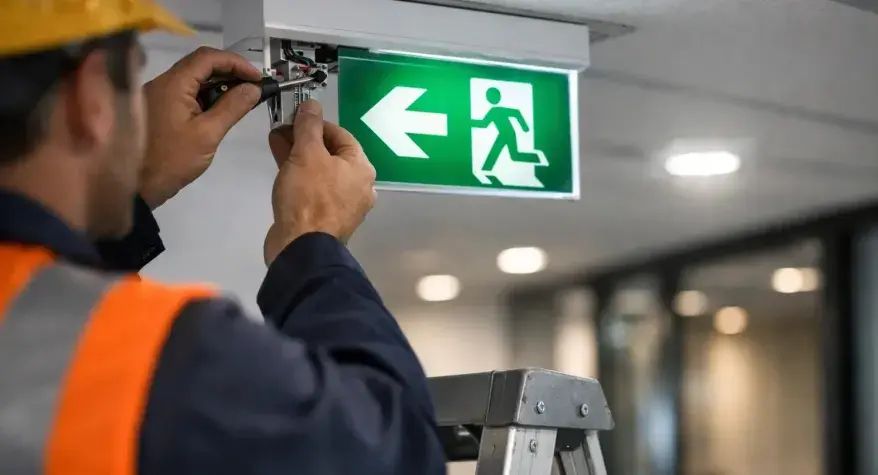
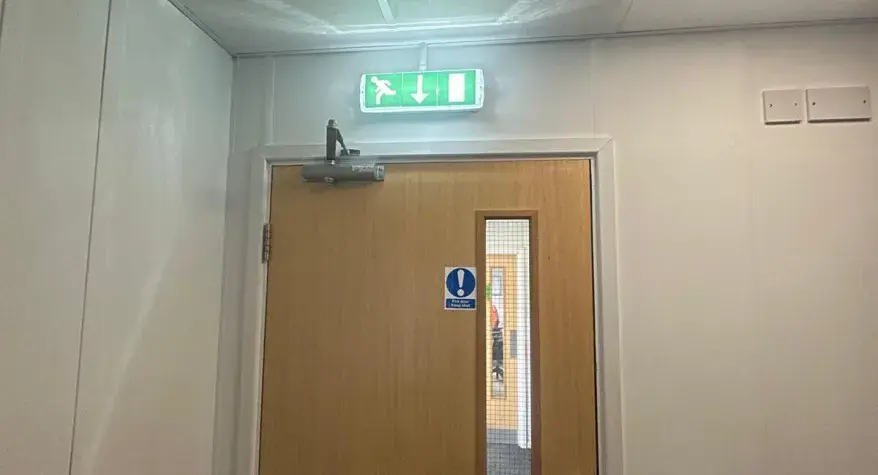
That is why emergency lighting installation requirements matter so much for landlords, business owners and anyone responsible for a property. It is not just about fitting a few backup lights. It is about making sure people can get out safely if normal lighting fails.
For many property owners, the difficult part is knowing what actually applies to their building. A small office, a block common area, a retail unit and an HMO will not always have the same layout, risk level or legal duties. The right approach starts with the building itself, how it is used and who may need to escape in an emergency.
What emergency lighting is meant to do
Emergency lighting is designed to operate when the normal mains lighting supply fails. In practical terms, it helps people find exits, follow escape routes, see changes in level such as steps, and identify key safety equipment. In some premises it may also be needed in higher-risk task areas where sudden darkness would create additional danger.
That sounds straightforward, but proper performance depends on more than the fitting. Light levels, duration, battery backup, positioning, testing access and ongoing maintenance all need to be considered at installation stage. If any of those parts are missed, the system may look fine on the ceiling but still fall short when it is actually needed.
Emergency lighting installation requirements in practice
When clients ask about emergency lighting installation requirements, they are usually trying to answer one of three questions. Do we need it, where should it go, and what standard should it meet? The answer is rarely a single sentence because compliance depends on use, layout and fire strategy.
In general, emergency lighting is required where people need a clear and safe means of escape if the usual lighting fails. That commonly includes escape routes such as corridors, staircases, hallways, exit points and areas without borrowed light. It can also include open areas, toilets in certain settings, plant rooms, windowless rooms, changes in direction, fire alarm call points, fire-fighting equipment points and final exits.
The installation should be based on a proper assessment rather than guesswork. A competent electrician will usually look at the building layout, occupancy, access routes and likely risk points before deciding on fitting types and locations. In some cases maintained fittings are suitable, where the light stays on during normal operation and emergency mode. In others, non-maintained fittings are used, which only operate during a power failure. Neither is automatically right for every building.
The standards and regulations behind the work
In the UK, emergency lighting is typically designed and installed with reference to British Standards and wider fire safety duties. The exact legal framework can vary depending on the type of premises, but for many commercial buildings and common areas the Regulatory Reform (Fire Safety) Order plays a central role. Landlords, responsible persons and employers may have duties to ensure suitable escape lighting is provided where needed.
British Standards commonly referred to in this area include BS 5266 for emergency lighting. Electrical installation work must also align with the relevant wiring regulations. This is one reason emergency lighting should not be treated as a simple add-on. It sits at the point where electrical safety, fire safety and practical building use all meet.
There is also a difference between meeting a minimum requirement and having a system that genuinely suits the building. A poorly chosen layout may technically include emergency fittings, but still leave dim patches, awkward shadows or unclear direction of travel. That is why a site-based design matters.
Where emergency lights usually need to be installed
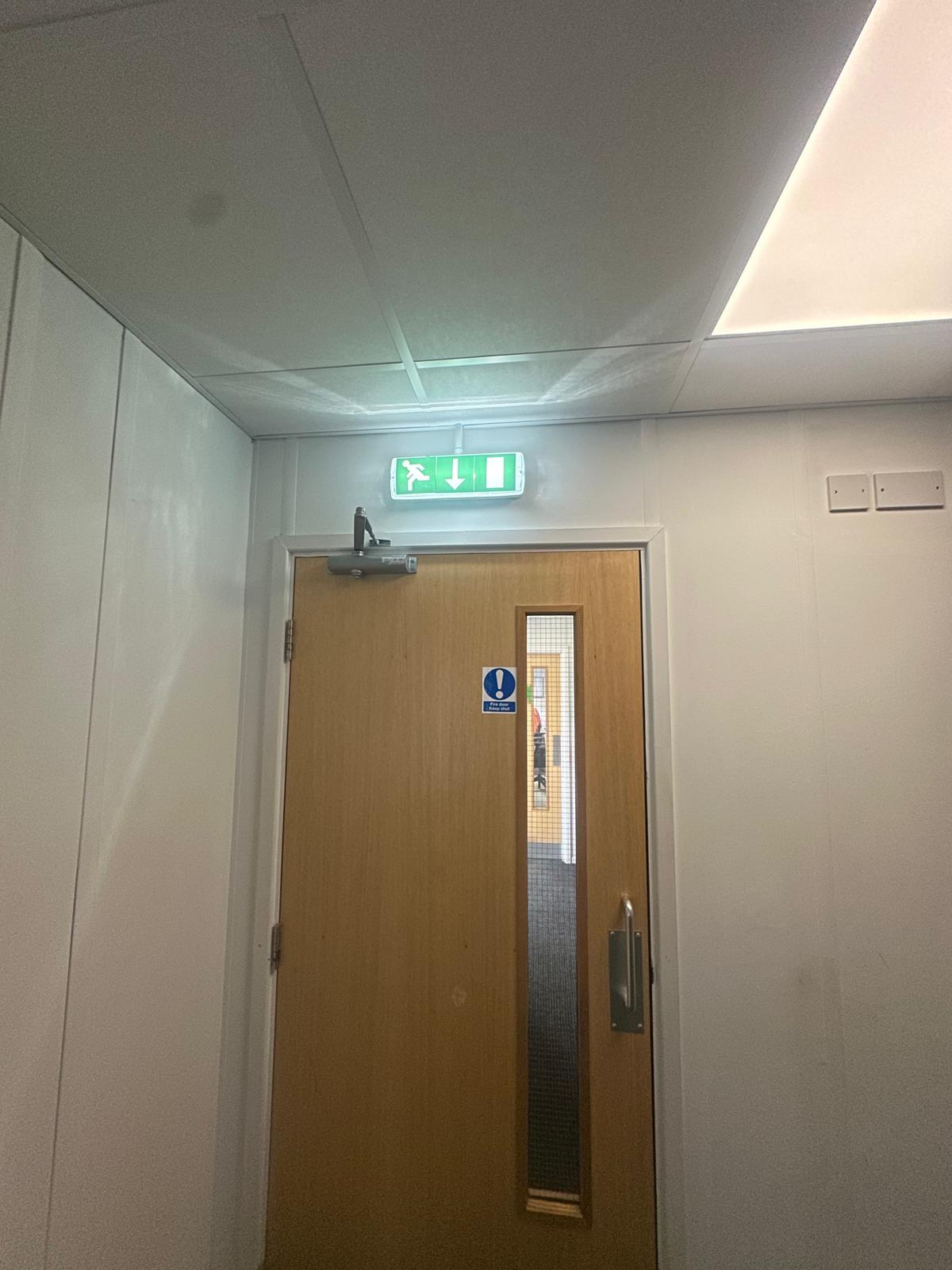
The most common locations are escape routes and final exits, but emergency lighting installation requirements often extend further than people expect. Staircases nearly always need careful attention because a sudden loss of light on steps creates obvious risk. Corridors and internal routes leading to exits are also key areas.
Open areas, sometimes called anti-panic areas, may need coverage so occupants can move safely towards an escape route. Rooms without windows or with complex layouts may need emergency lighting even if they seem secondary in day-to-day use. Fire alarm panels, extinguishers and manual call points should also be visible during an emergency.
Changes in floor level, intersections in corridors, exit doors and external escape routes may all need lighting depending on the building arrangement. In practical terms, that means a proper survey often identifies more than the obvious front corridor and staircase.
Common mistakes that cause problems later
One of the most common issues is installing too few fittings. This often happens where someone assumes one bulkhead at each end of a corridor will be enough. In reality, spacing, brightness and obstructions all affect performance.
Another problem is choosing the wrong fitting type. A maintained exit sign may be needed where people rely on visible signage at all times, while a non-maintained fitting might be suitable elsewhere. If fittings are mixed without a clear plan, the result can be confusing and inconsistent.
Battery duration is another point that gets overlooked. Emergency lighting commonly needs to operate for a set period, often long enough to allow safe evacuation and account for building use. If the system does not provide that duration, or if testing arrangements are poor, compliance can quickly become questionable.
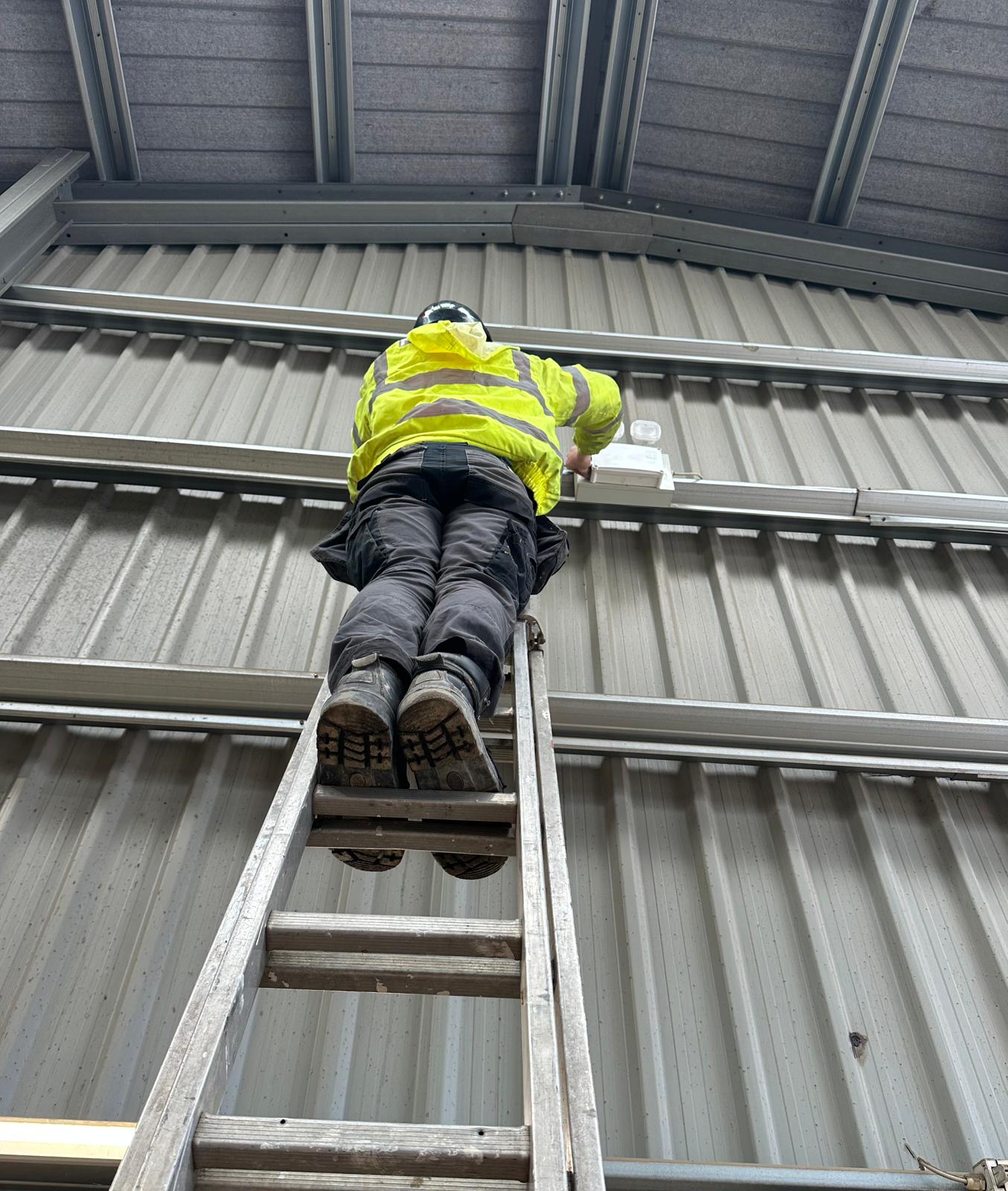
Access for maintenance matters too. A fitting installed above a difficult stair void or in an awkward high-level position may become expensive or impractical to test properly. Good installation work takes future servicing into account, not just the quickest route to completion on the day.
Why testing and certification are part of the job
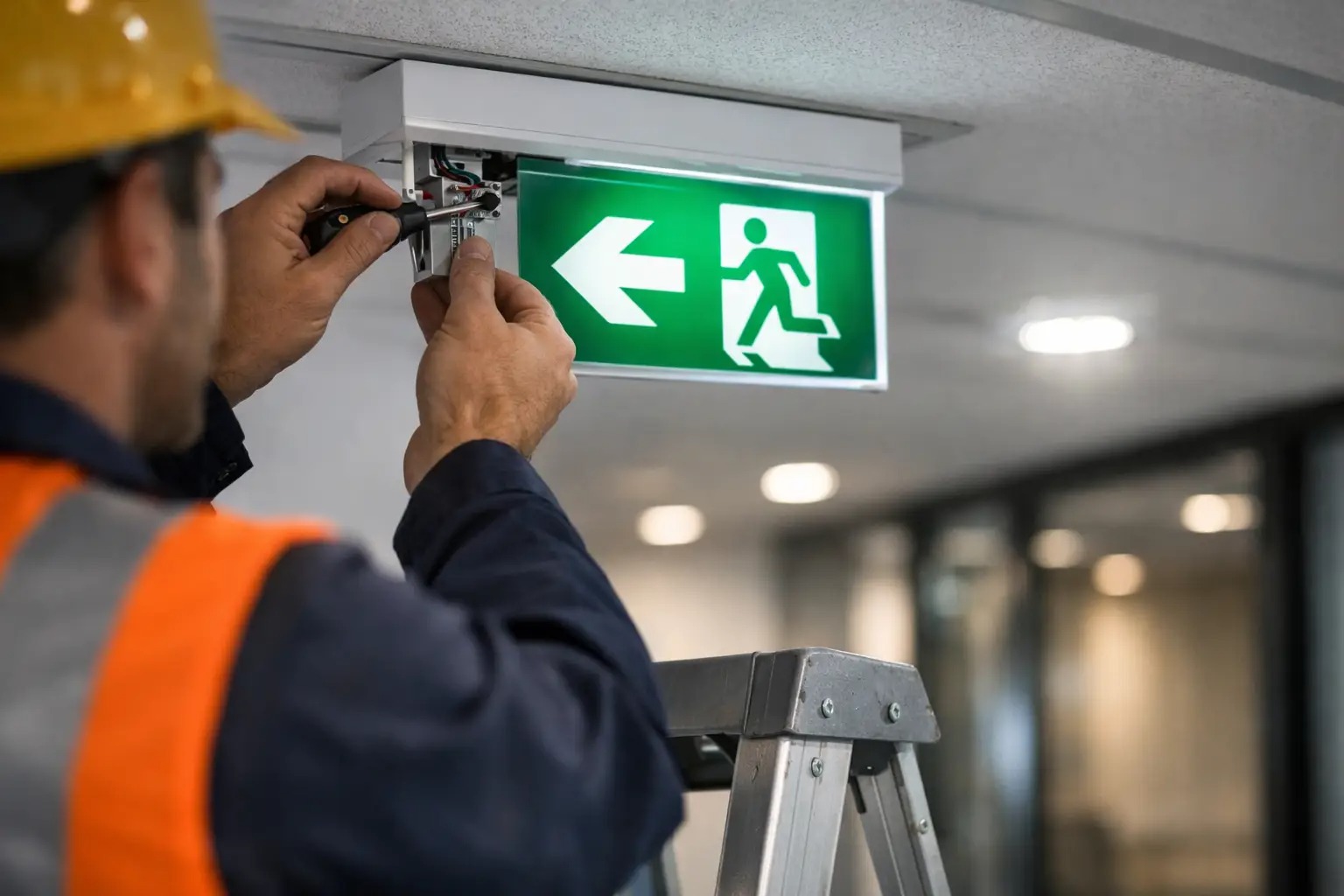
Installing the fittings is only part of the process. Emergency lighting needs proper commissioning, functional testing and certification. The system should be checked to confirm it operates correctly on loss of mains supply and that fittings, indicators and batteries perform as intended.
A record of the installation and its test results is important for landlords, businesses and managing agents. It helps show that the system was installed professionally and gives a clear starting point for future inspections. Ongoing routine testing is then needed to keep the system compliant and dependable.
This is where a lot of avoidable issues come from in rented and managed buildings. A system may have been installed years ago, but if records are incomplete and regular checks have slipped, no one is fully confident in its condition. That is not a position most responsible persons want to be in, especially after a complaint, inspection or incident.
Different properties, different requirements
A small shop with a simple route to the front door will not need the same arrangement as a multi-storey office or a block with internal communal stairs. HMOs, commercial units, common parts of residential buildings and mixed-use properties can all have different considerations.
This is why off-the-shelf answers are risky. Some clients ask for a like-for-like replacement because that is what was there before. Sometimes that is reasonable, but not always. Changes to layout, occupancy, partitions or use can alter what is required. An older installation may not reflect current standards or present-day risk.
For landlords and agents, this point is especially important during refurbishments, change of tenancy, or when upgrading alarms and other fire safety systems. Emergency lighting should be reviewed as part of the wider picture rather than treated as a separate afterthought.
Choosing a contractor for emergency lighting work
Emergency lighting is a safety system, so the standard of workmanship matters. You want an electrician who assesses the property properly, explains what is needed in plain English and provides a clear written quotation. If there is a design choice to make, such as maintained versus non-maintained fittings or self-test options versus manual testing, that should be discussed openly.
Good contractors also think beyond installation day. They consider neat cable routes, sympathetic fitting placement, testing access and the practicalities of future maintenance. In occupied homes and business premises, they should work tidily and with minimal disruption.
For local property owners in North West London, a dependable contractor can save a great deal of time and uncertainty. Lighthouse Engineering Ltd regularly helps clients understand what is required, what can stay, what needs upgrading and how the work can be carried out safely and efficiently.
Getting the right result without overcomplicating it
The best emergency lighting installations are the ones people do not have to worry about. They are clearly planned, properly tested and suited to the building they protect. Not every property needs a complex system, but every property that requires emergency lighting should have one that works when it counts.
If you are unsure whether your premises meet emergency lighting installation requirements, the sensible next step is a professional assessment. It gives you a clear view of the risks, the likely scope of work and any gaps that need attention now rather than later.
A safe building is rarely the result of guesswork. It comes from getting the basics right, checking the details and making sure the people using the property can rely on it when the lights go out.
If you would like more information about emergency lighting installation, get in touch with our knowledgeable team.