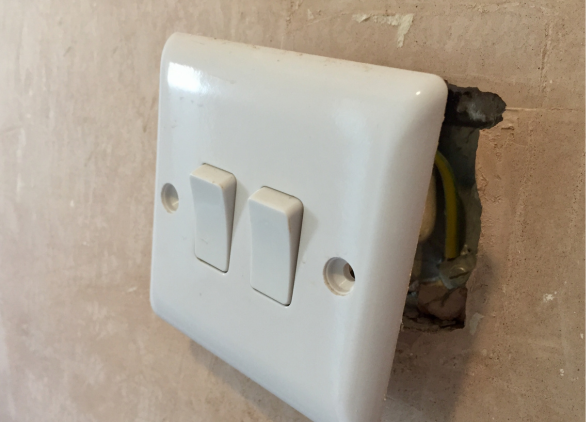
A house rewire is one of the most disruptive electrical improvements you can make to a property, but it can also be one of the most valuable. If you own an older home in Dollis Hill, Cricklewood, Willesden Green, Kilburn, Wembley, Hendon or elsewhere in North West London, rewiring can provide a safer, more practical electrical installation designed around the way your home is used today.
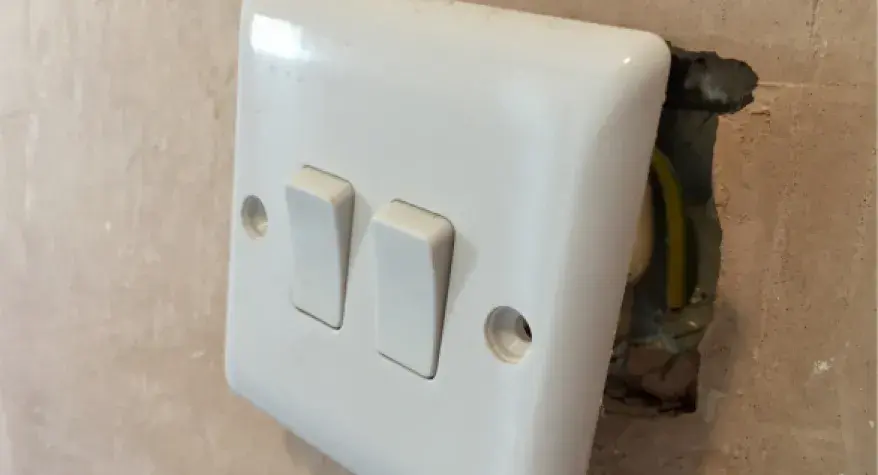
Many older properties have electrical systems that have been altered over decades. An extra socket may have been added here, a new kitchen circuit there, perhaps with extensions and modifications carried out by different people over the years. The result can be an installation that is difficult to understand, difficult to maintain and no longer suited to modern electrical demand.
A properly planned rewire brings the electrical installation up to modern requirements and gives you the opportunity to completely rethink sockets, lighting, circuits and future electrical needs.
This house rewiring checklist explains what homeowners, landlords and property managers should consider before starting a rewire.
When Does a House Need Rewiring?
Not every electrical problem means that a property needs a complete rewire.
A faulty socket, damaged cable, defective light fitting or individual circuit can sometimes be repaired safely without replacing the entire installation. Similarly, an outdated consumer unit does not automatically mean that every cable in the property needs replacing.
A full or partial rewire becomes more likely where wiring is old, damaged, deteriorated, poorly installed or unable to meet the electrical requirements of the property.
Warning signs can include:
- Frequently tripping electrics
- Flickering or dimming lights
- Burning smells
- Warm or discoloured sockets
- Cracked or damaged switches
- Exposed or damaged cables
- Repeated electrical faults
- Circuits that cannot be identified
- Lack of adequate earthing or bonding
- Old rubber, lead-sheathed or fabric-insulated wiring
If you are experiencing electrical faults, don't automatically assume that a full rewire is required. An experienced electrician should inspect the installation and explain what actually needs doing.
If you are buying an older property in Dollis Hill, NW2, Cricklewood or surrounding areas, an electrical inspection before committing to major renovation work can also be worthwhile.
House Rewiring Checklist Before Work Starts
The best time to make electrical decisions is before the first floorboard is lifted, wall is chased or ceiling is opened.
Planning the electrical installation properly at the beginning can save considerable disruption and expense later.
Have the Existing Electrical Installation Assessed
Before deciding on a complete rewire, establish the condition of the existing installation.
An electrician should consider:
- Consumer unit and protective devices
- Earthing arrangements
- Main bonding
- Existing circuits
- Visible wiring
- Socket outlets and switches
- Lighting circuits
- Circuit loading
- Previous alterations
- General condition of the installation
This is particularly important in older North West London properties, where electrical installations may have been modified several times over the years.
The inspection should help establish whether the property needs a full rewire, partial rewire, consumer unit upgrade, individual repairs or a combination of improvements.
Plan Socket Locations Room by Room
One of the biggest mistakes homeowners make during a rewire is simply replacing sockets in their existing positions.
Think about how you actually use each room.
Living room
Consider sockets for:
- Television
- Broadband equipment
- Lamps
- Phone chargers
- Games consoles
- Sound systems
- Home entertainment equipment
Bedrooms
Consider:
- Bedside sockets
- USB charging
- Television
- Desk equipment
- Lamps
- Dressing table
- Future home-working requirements
Kitchen
The kitchen normally has a particularly high electrical demand.
Consider appliances such as:
- Oven
- Hob
- Extractor
- Fridge/freezer
- Dishwasher
- Washing machine
- Tumble dryer
- Microwave
- Kettle
- Coffee machine
- Toaster
Your electrician should design the appropriate circuits rather than simply adding more sockets to an existing circuit.
Think Carefully About Lighting
A rewire is an excellent opportunity to improve the lighting throughout your home.
Consider:
- Ceiling lights
- Pendant lights
- Downlights
- Wall lights
- Dimmers
- Under-cabinet lighting
- Feature lighting
- Garden lighting
- Security lighting
- Two-way switching
Think about how you want the lights controlled.
For example, being able to switch a staircase light from both upstairs and downstairs is much easier to achieve during a rewire than after the walls and ceilings have been finished.
Consider Future Electrical Requirements
Your electrical requirements are likely to change over the coming years.
You may currently have no need for an EV charger, garden office or extensive home-working equipment, but it is worth discussing future plans with your electrician.
Possible future requirements include:
- EV charging
- Garden offices
- Outdoor sockets
- Garden lighting
- Security systems
- Electric heating
- Additional kitchen appliances
- Home offices
- Smart home systems
This does not mean installing unnecessary circuits simply because they might be useful one day.
Instead, discuss realistic future requirements with your electrician so that sensible provision can be made while access to the property is available.
Choosing the Right Consumer Unit
The consumer unit is one of the most important parts of your electrical installation.
During a rewire, the consumer unit and protective devices should be considered as part of the overall electrical design rather than treated as a separate job.
Modern installations use protective devices designed to reduce the risk of electric shock and electrical fires.
Your electrician should explain:
- Which circuits are being installed
- How circuits will be divided
- What protective devices are being used
- How the consumer unit will be labelled
- What testing will be carried out
A sensible circuit arrangement can also make future fault finding easier.
For example, separating lighting, socket circuits, kitchen appliances and external supplies can help prevent a fault from unnecessarily affecting large parts of the property.
What Is Included in a Full House Rewire?
A complete rewire is much more than changing old sockets and light switches.
Depending on the property and specification, a full rewire can involve:
- New electrical cabling
- New socket outlets
- New switches
- New lighting points
- New dedicated appliance circuits
- Consumer unit replacement or upgrade
- Earthing and bonding improvements
- Appropriate protective devices
- Circuit identification and labelling
- Inspection and testing
- Electrical certification
The exact specification will depend on the property.
A Victorian or Edwardian house in Dollis Hill, Cricklewood or Willesden Green, for example, may require a very different approach from a modern property.
This is why an experienced electrician should inspect the property before providing a detailed quotation.
How Much Does a House Rewire Cost?
There is no standard price for a house rewire because every property is different.
The cost can be affected by:
- Property size
- Number of bedrooms
- Number of circuits
- Number of sockets
- Number of lighting points
- Kitchen requirements
- Type of lighting
- Accessibility of cables
- Condition of the existing installatio
- Whether the property is occupied
- Amount of chasing required
- Floor construction
- Consumer unit requirements
- Additional electrical work
A small property with good access can be considerably different from a large Victorian house where cables are difficult to access.
For this reason, online estimates should only ever be treated as a rough guide.
The best approach is to have the property assessed and obtain a clear written quotation setting out exactly what is included.
Can You Stay in Your Home During a Rewire?
Sometimes, but a full rewire can be disruptive.
Cables may need to be accessed beneath floors, inside walls and above ceilings. There will also be periods when parts of the electrical installation need to be switched off.
An empty property will generally allow the work to progress more efficiently.
If you are living in the property, discuss this with your electrician before work starts. Depending on the layout and scope, the work may be phased to make the disruption more manageable.
You should also discuss:
- Furniture
- Floor protection
- Dust protection
- Access to rooms
- Temporary power
- Periods without electricity
- Which rooms will be unavailable
A good electrician should explain the disruption honestly rather than promising that a full rewire will be completely mess-free.
How Long Does a House Rewire Take?
The time required depends on the size and construction of the property and the complexity of the installation.
Factors include:
- Number of rooms
- Number of circuits
- Number of electricians working
- Accessibility of existing cables
- Amount of wall chasing
- Flooring
- Ceiling access
- Kitchen or bathroom refurbishment
- Additional lighting
- External electrical work
A smaller property with good access may take considerably less time than a large house requiring extensive access work.
Before the job starts, ask your electrician for an estimated programme and discuss which rooms will be affected at each stage.
Rewiring During a House Renovation
If you are already planning a major refurbishment, the electrical work should ideally be planned before plastering, decorating and new flooring.
This is particularly important if you are:
- Renovating a kitchen
- Refurbishing a bathroom
- Converting a loft
- Building an extension
- Altering room layouts
- Installing new lighting
- Creating a home office
- Renovating an older property
It is much easier to install new cables when walls, ceilings and floors are accessible.
If you are renovating a property in Dollis Hill, Wembley, Cricklewood, Kilburn or Willesden Green, involve your electrician at the planning stage rather than waiting until the building work is almost finished.
Could a Partial Rewire Be Enough?
A full rewire is not always necessary.
Depending on the condition of the installation, a partial rewire may be a sensible option.
For example, specific circuits may require replacement while other parts of the installation remain suitable.
However, this decision should be based on the condition and requirements of the installation rather than simply choosing the cheapest option.
An experienced electrician should explain:
- What can safely remain
- What needs replacing
- Why replacement is necessary
- What the risks are
- What improvements would be recommended
This gives you the information needed to make an informed decision.
Don't Forget Smoke Alarms and Other Safety Systems
A rewire is also an opportunity to review other electrical safety equipment.
Depending on the property, this could include:
- Smoke alarms
- Heat alarms
- Carbon monoxide alarms
- Emergency lighting
- Extractor fans
- External lighting
- Security lighting
- Garden electrical supplies
Landlords and property managers should also consider any additional electrical safety requirements that apply to the property.
These systems should be considered as part of the overall electrical plan rather than added as an afterthought.
What Electrical Certificate Will I Receive?
Electrical installation work should be inspected and tested when completed.
For qualifying new electrical installation work, the appropriate electrical certification should be provided.
Keep the documentation with your property records.
It may be useful when:
- Selling your property
- Carrying out future electrical work
- Arranging further inspections
- Managing a rental property
- Demonstrating that installation work has been properly completed
If you are a landlord, make sure you understand the separate electrical safety requirements applicable to your property.
Questions to Ask Your Electrician
Before agreeing to a house rewire, ask the following:
Is the quotation in writing?
Make sure you understand exactly what is included.
Does the quotation include testing and certification?
This should be confirmed before the work begins.
Who will carry out the work?
Ask whether the contractor will complete the work themselves or use other electricians.
How long will the work take?
Ask for an estimated programme and discuss how the work will be phased.
What happens if hidden problems are discovered?
Older properties can contain unexpected issues. Agree how additional work will be identified, explained and approved.
Is making good included?
Clarify whether plastering, decorating, flooring repairs and other building work are included in the quotation.
How disruptive will the work be?
A professional electrician should give you a realistic explanation of what to expect.
Common House Rewiring Mistakes
Choosing the cheapest quotation
The cheapest quotation is not necessarily the cheapest job.
Always compare what each electrician is actually offering.
A cheaper quote may exclude items such as additional circuits, accessories, testing, certification or other necessary work.
Not installing enough sockets
Think about how you use every room now and how you may use it in the future.
Adding sockets after walls and floors have been completed can create unnecessary disruption.
Forgetting outdoor electrics
If you are considering garden lighting, outdoor sockets, a garden office, security lighting or an EV charger, mention it before the electrical design is finalised.
Leaving lighting decisions until the last minute
Decide where lights will go and how they will be switched before cables are installed.
Assuming a new consumer unit means the property has been rewired
A new consumer unit does not automatically mean the existing cabling is suitable.
The condition of the whole installation needs to be considered.
Treating a rewire as a cosmetic upgrade
A rewire is not simply about replacing old switches and sockets.
The underlying electrical installation, circuit design, protective devices, earthing and bonding all need to be considered.
Why Choose Lighthouse Engineering Ltd for House Rewiring?
Lighthouse Engineering Ltd is a NICEIC registered, Part P registered and Trusted Trader electrical contractor, with over 30 years' experience providing electrical services throughout Dollis Hill, NW2 and North West London.
We carry out a wide range of domestic electrical work, including:
- Full and partial house rewires
- Electrical fault finding
- Consumer unit upgrades
- Lighting installations
- Additional sockets
- Electrical testing
- EICRs
- Smoke and heat alarm installations
- Security lighting
- Garden and outdoor electrics
- Garden office electrical supplies
Our approach is straightforward.
We explain the work clearly, provide honest advice and don't recommend unnecessary electrical work.
If your property does not need a complete rewire, we will tell you.
If an upgrade or replacement is necessary, we will explain what is required and why.
With more than 30 years of practical electrical experience, we understand that every property is different — particularly older homes throughout Dollis Hill, Cricklewood, Kilburn, Willesden Green, Wembley and the surrounding NW London areas.
Planning a House Rewire in Dollis Hill or NW London?
If you are considering rewiring your home, the best place to start is with an assessment of the existing electrical installation.
Whether you need a full rewire, partial rewire, consumer unit upgrade or simply advice about an ageing electrical system, Lighthouse Engineering Ltd can assess the property and explain your options.
A properly planned rewire can give you safer electrics, better positioned sockets, improved lighting and an electrical installation designed around the way your home is actually used.
Lighthouse Engineering Ltd
NICEIC Registered | Part P Registered | Trusted Trader
Over 30 years' electrical experience
📞 020 8452 0694
🌐 Fill out our contact form
Serving Dollis Hill, NW2, Cricklewood, Willesden Green, Kilburn, Wembley, Hendon and surrounding North West London areas.
Frequently Asked Questions
How do I know if my house needs rewiring?
Age alone does not determine whether a house needs rewiring. The condition of the wiring, circuits, protective devices, earthing and bonding should be assessed by a qualified electrician.
Does an old fuse board mean I need a rewire?
Not necessarily. An outdated consumer unit may need upgrading, but this does not automatically mean that every cable in the property needs replacing.
Can an electrician rewire only part of a house?
Yes. Depending on the condition of the installation, a partial rewire may sometimes be appropriate. The decision should be based on an inspection rather than price alone.
Should I rewire before renovating my house?
Ideally, yes. If you are already opening walls, ceilings or floors, it is much easier to carry out electrical work before plastering, decorating and installing new flooring.
Is a house rewire disruptive?
Yes. A full rewire can involve lifting floors, accessing ceilings and chasing walls. The amount of disruption depends on the property and how accessible the existing wiring is.
How long does a full house rewire take?
The time varies depending on the size and construction of the property, the number of circuits, accessibility and the specification. Your electrician should provide an estimated programme before starting.
Do I receive a certificate after a rewire?
Electrical installation work should be inspected and tested, with the appropriate electrical certification provided for qualifying work. Keep the documentation with your property records.
Is Lighthouse Engineering a Trusted Trader?
Yes. Lighthouse Engineering Ltd is a Trusted Trader, NICEIC registered and Part P registered, with over 30 years' experience in electrical work.
Does Lighthouse Engineering carry out rewires in Dollis Hill?
Yes. Lighthouse Engineering Ltd provides full and partial rewiring, electrical fault finding, consumer unit upgrades, lighting and electrical testing across Dollis Hill, NW2 and surrounding North West London areas.