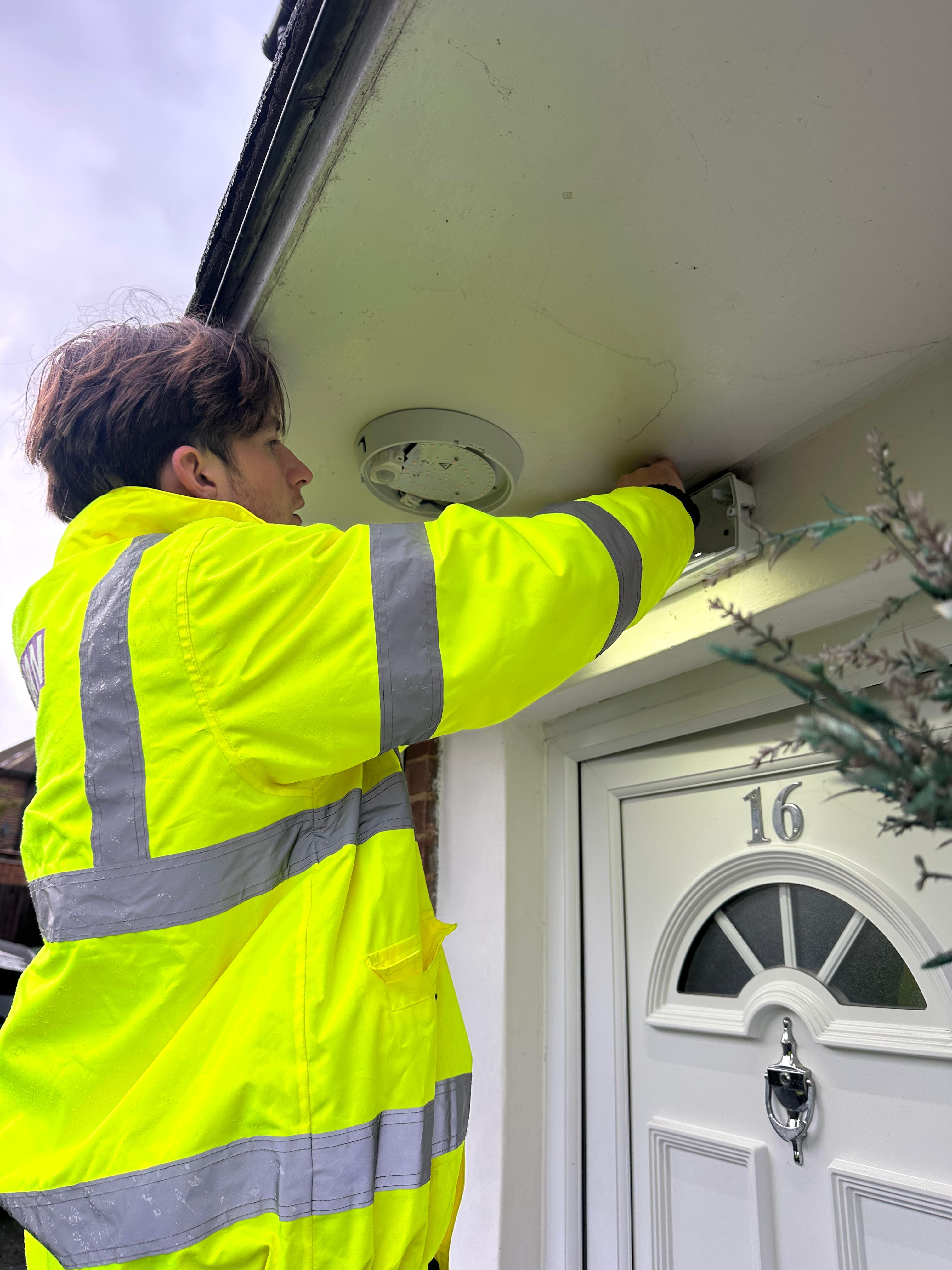
A dark side passage, poorly lit driveway or unlit entrance can make a property feel less secure before anyone has even approached the door.
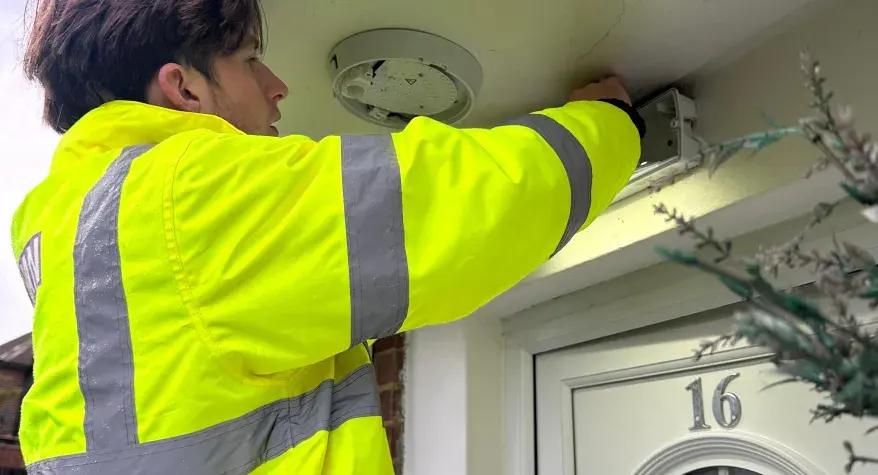
Well-planned security lighting helps remove those blind spots, makes everyday access safer and gives homeowners, landlords and businesses a clearer view of what is happening outside.
The right installation is not simply about choosing the brightest light available. A fitting that shines into a neighbour's bedroom, switches on every time a fox passes or creates glare across a driveway can cause more problems than it solves.
The best results come from choosing suitable fittings, positioning them correctly and using controls that match how the property is used.
What Should Good Security Lighting Achieve?
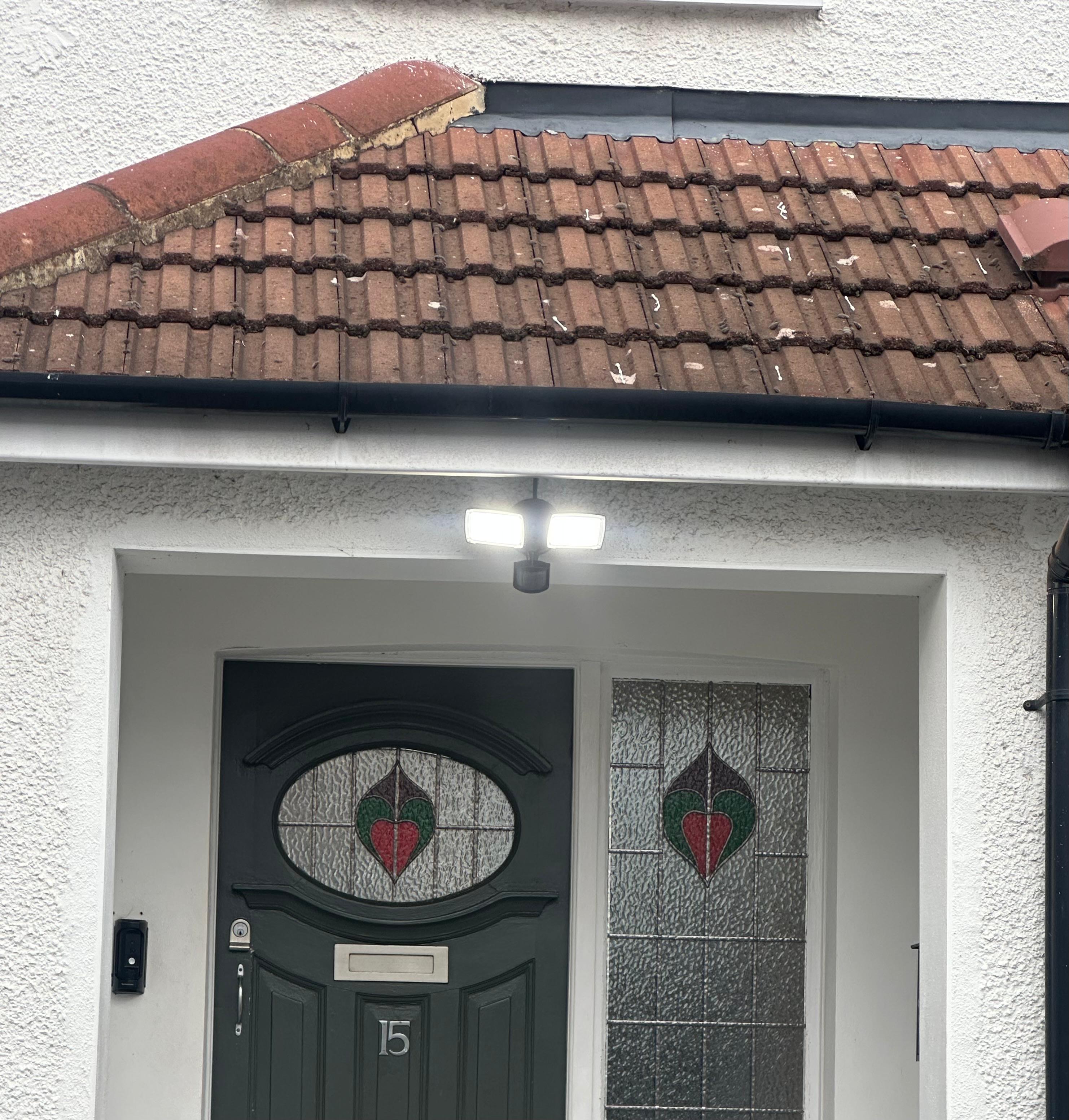
A good external lighting installation has three main purposes:
Improve visibility: Illuminate entrances, driveways, side passages, rear gardens and garages.
Discourage unwanted activity: Make darker areas less attractive to someone looking for an opportunity.
Improve safety: Help residents, visitors and staff move around the property safely after dark.
For properties in Dollis Hill, Cricklewood, Willesden Green and surrounding North West London areas, the front entrance and side access are often the most important places to start.
Terraced and semi-detached properties frequently have narrow side passages where movement can go unnoticed. Flats and managed buildings may also benefit from better lighting around communal entrances, steps, refuse areas and parking spaces.
Security lighting works best alongside good locks, secure gates, sensible landscaping and alarm or camera systems where appropriate.
Choosing the Right Type of Security Lighting
Different areas require different lighting solutions. One fitting will not necessarily be suitable for every part of a property.
PIR Motion Sensor Security Lights
PIR (Passive Infrared) security lights switch on automatically when movement is detected.
They are particularly useful for:
- Driveways and parking areas.
- Side passages and garden gates.
- Rear entrances and garages.
- Paths leading to the front door.
Because they only operate when movement is detected, they can help reduce unnecessary energy consumption.
Correct positioning is important. A sensor facing a busy pavement or road may trigger unnecessarily. Adjusting the detection range, sensitivity and lighting duration can help improve performance.
Dusk-to-Dawn Security Lighting
Photocell-controlled lighting automatically switches on when natural daylight fades and switches off again in the morning.
These fittings are useful for:
- Front entrances.
- Communal access areas.
- Business premises.
- Parking areas and pathways.
Modern LED fittings offer good energy efficiency while providing consistent illumination throughout the hours of darkness.
Timed and Switched External Lighting
Timer-controlled lighting is useful where properties have predictable opening or closing times.
It can provide illumination around shopfronts, office entrances and communal areas without leaving lights running unnecessarily throughout the night.
Manual overrides can also be useful when residents or staff need additional lighting temporarily.
Security Lighting and CCTV
Security lighting can work particularly well alongside CCTV cameras and video doorbells.
Correctly positioned lighting can improve camera images and help capture useful detail around entrances and gates.
However, excessively bright lights can create glare and affect camera performance. Lighting and camera positions should therefore be considered together.
Where Should Security Lights Be Installed?
The position of a security light is just as important as the fitting itself.
Front entrances
Good lighting around the front door helps visitors identify the property, find their keys and safely access the entrance.
Driveways and garages
Lighting should cover the route between the vehicle and the property without dazzling drivers or shining unnecessarily towards neighbouring homes.
Side passages
Narrow passages are often overlooked. A correctly positioned PIR light can illuminate gates, access routes and areas leading to the rear garden.
Rear gardens and entrances
Consider patio doors, garden gates, sheds, garages and any areas that could otherwise remain hidden in darkness.
Commercial premises
Businesses may require improved lighting around delivery entrances, staff access points, car parks and external walkways. Emergency lighting is a separate safety system and must not be replaced by ordinary security lighting.
Choosing the Right Brightness and Colour
More brightness does not automatically mean better security.
Excessive glare can make it harder to see into darker areas beyond the light itself. It can also disturb neighbours and affect people using nearby roads and pathways.
Modern LED security lighting provides excellent illumination with relatively low energy consumption.
Neutral white lighting is often a practical choice for driveways and access routes, while warmer lighting may be preferable around front entrances and garden areas.
Downward-facing fittings and suitable positioning help keep light where it is needed rather than shining into neighbouring properties.
This is particularly important in closely built-up areas of North West London.
Electrical Safety When Installing Outdoor Lighting
Outdoor electrical installations are exposed to rain, changing temperatures, dirt and physical damage.
External fittings, cables, connections and controls must be suitable for their location and installed correctly.
Existing outdoor lights that flicker, trip the consumer unit, fill with condensation or stop working after rainfall should be inspected by a qualified electrician.
The problem could be caused by:
- Water entering the light fitting.
- Damaged external cabling.
- Loose or deteriorating connections.
- A faulty PIR sensor.
- A problem with the electrical circuit.
Simply replacing the visible fitting without investigating the underlying fault may leave the problem unresolved.
Planning Your Security Lighting Installation
Before choosing your fittings, walk around your property after dark, where it is safe to do so.
Think about:
- Areas where visibility is poor.
- Routes regularly used by residents and visitors.
- Entrances that need additional illumination.
- Places where movement could go unnoticed.
- Whether each light needs to operate continuously or only when movement is detected.
A combination of lighting types is often the most practical solution. For example, a low-level light near the front entrance combined with PIR security lighting around side and rear access points.
A properly planned installation provides useful illumination without wasting energy or disturbing neighbours.
Security Lighting Installation in Dollis Hill, Cricklewood and NW London
Lighthouse Engineering Ltd provides professional external and security lighting installations for homeowners, landlords and businesses across North West London.
Whether you need a PIR motion-sensor light for a side passage, improved driveway lighting, garden security lighting or a complete external lighting upgrade, we can help you find a suitable solution.
We cover:
Surrounding North West London areas
With over 30 years of electrical experience, we pride ourselves on providing honest advice, reliable service and tidy workmanship.
Lighthouse Engineering Ltd is a NICEIC Approved Contractor and Which? Trusted Trader.
If you are considering improving the security lighting around your property, get in touch to discuss your requirements and arrange a quotation.